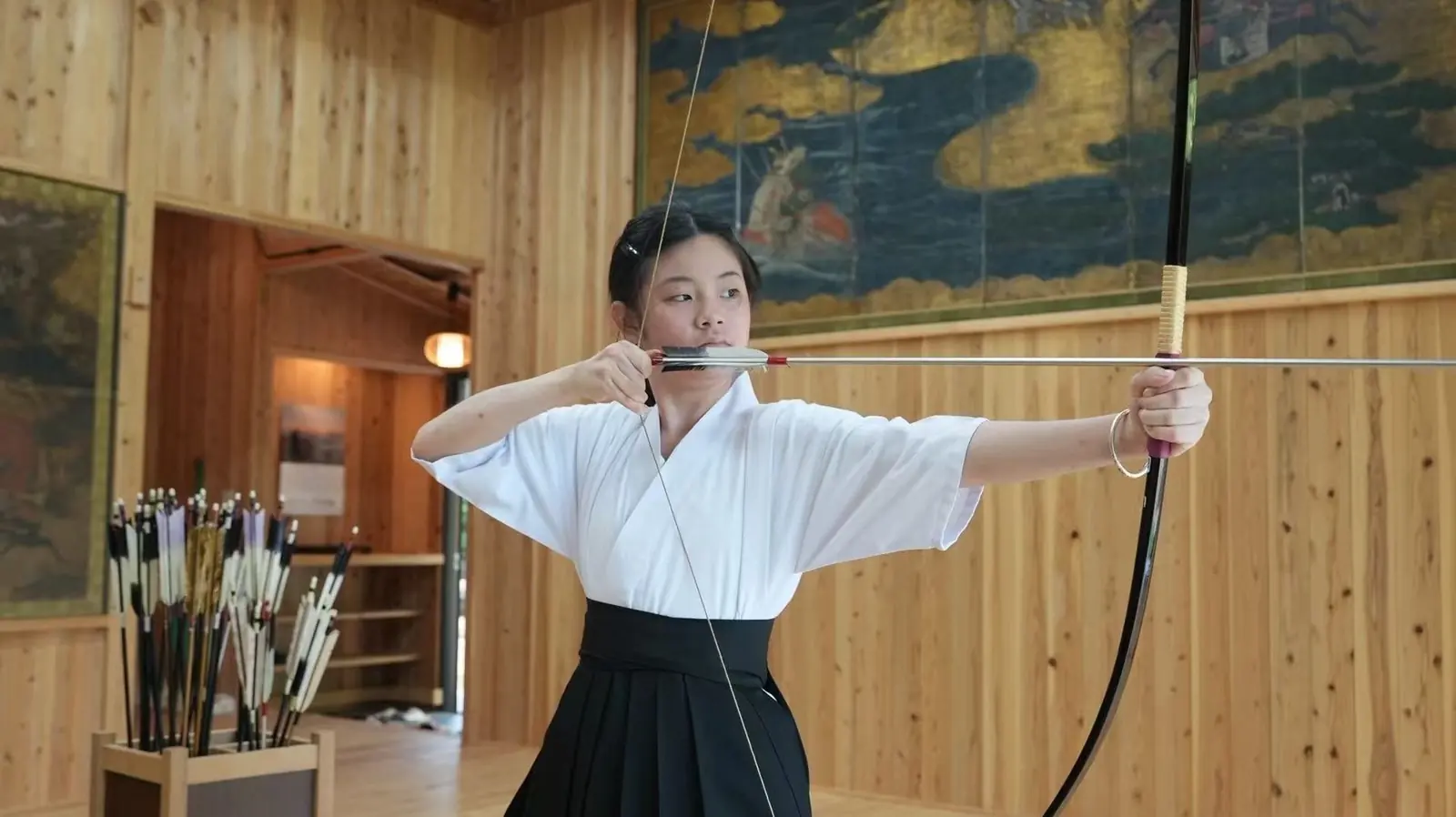
Two nights at a six-room cultural resort in the forest below Mount Aso — where the hall behind the main house has a shrine to the kami of the sword, armour along both walls, and, if you book it privately, no minimum age. Then a car, a road across the caldera rim, and a ship that leaves Beppu at 18:45 and puts you on the dock in Osaka at 06:35, luggage and rental car and all, while everyone sleeps.
It's the day you come back.
You've spent four days somewhere genuinely different — volcano country, hot springs, a part of Japan almost no American family sees. Then you look at the map and realise that getting to Kyoto means most of a day: a drive to the station, a transfer at Hakata, four hours of shinkansen with two children and everyone's luggage in the aisle, and an afternoon arrival too late to do anything with.
You paid for a day of your holiday and you got a corridor.
This is that day, deleted. Not shortened — deleted. You go to sleep in Beppu and wake up in Osaka with the whole day in front of you.
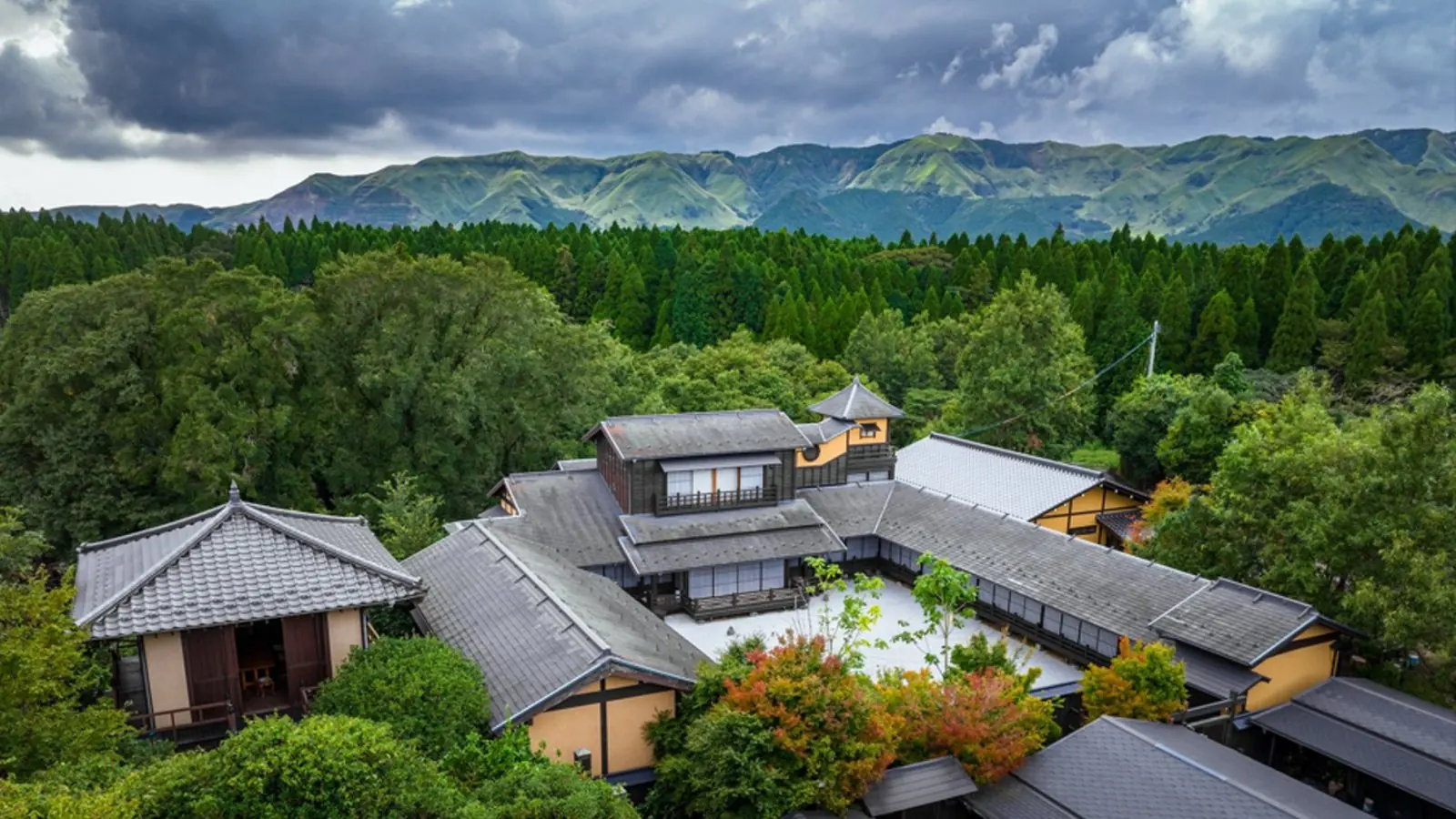
Fifty-six thousand square metres. More than thirty traditional buildings. Six guest rooms.
That ratio is the whole thing. Meihodo is not a hotel with cultural activities bolted on — it is a working cultural estate, built in the manner of an Edo-period samurai residence, in the forest at the foot of Mount Aso. There is a karate dojo and a kendo dojo. A regulation kyudo range. Rooms kept for tea and for ikebana. A reading hall, a meditation hall, an Edo-period kitchen, and a museum of Buddhist statuary and Ming and Qing furniture.
There is also a pond where egrets nest through spring and summer and wild ducks take the place over in winter, in their thousands.
And at night there is almost nobody there but you.
Six rooms means six rooms. There is no version of this where you find it in August and book it for spring break. Dates are held early, by telephone, in Japanese.
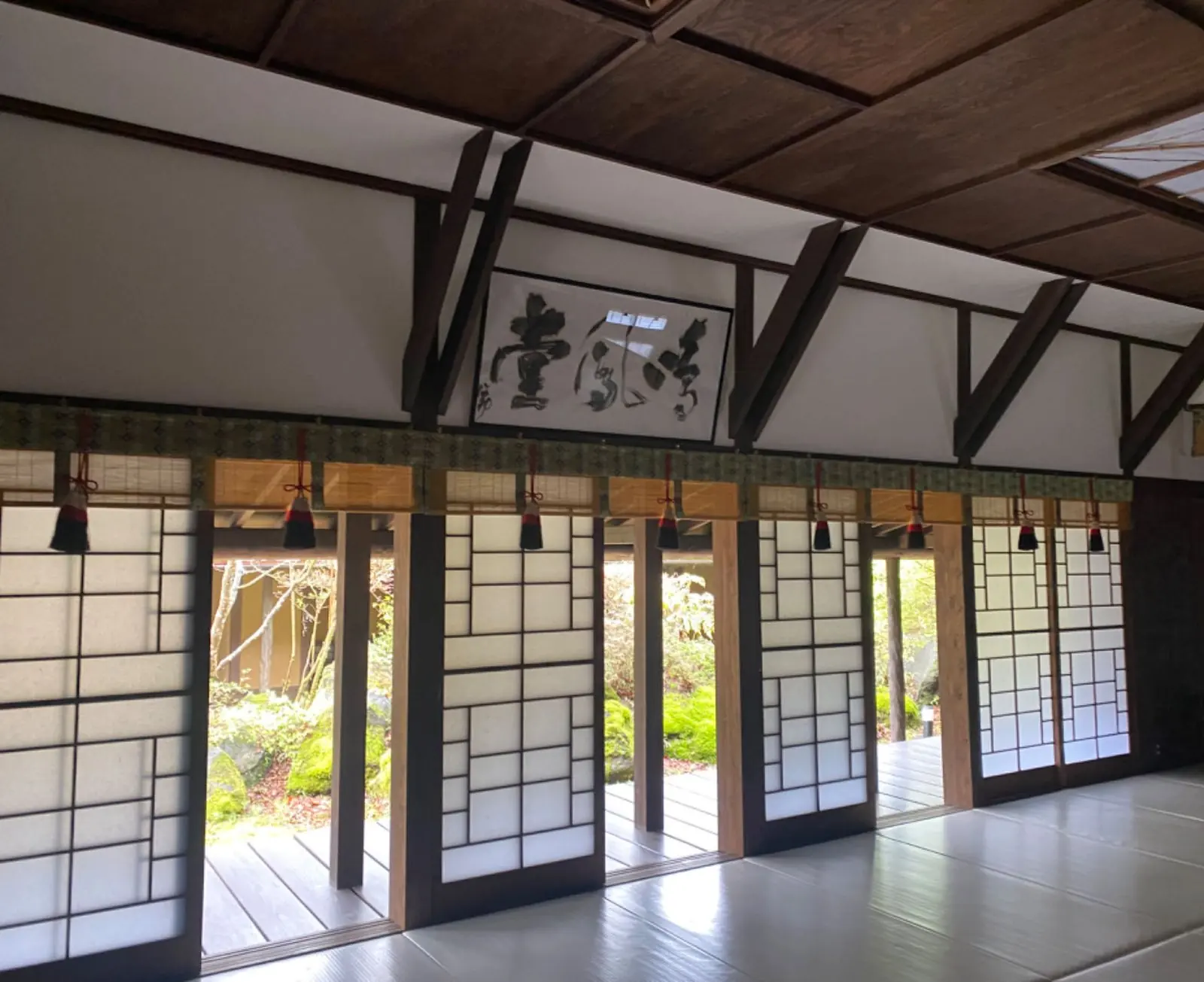
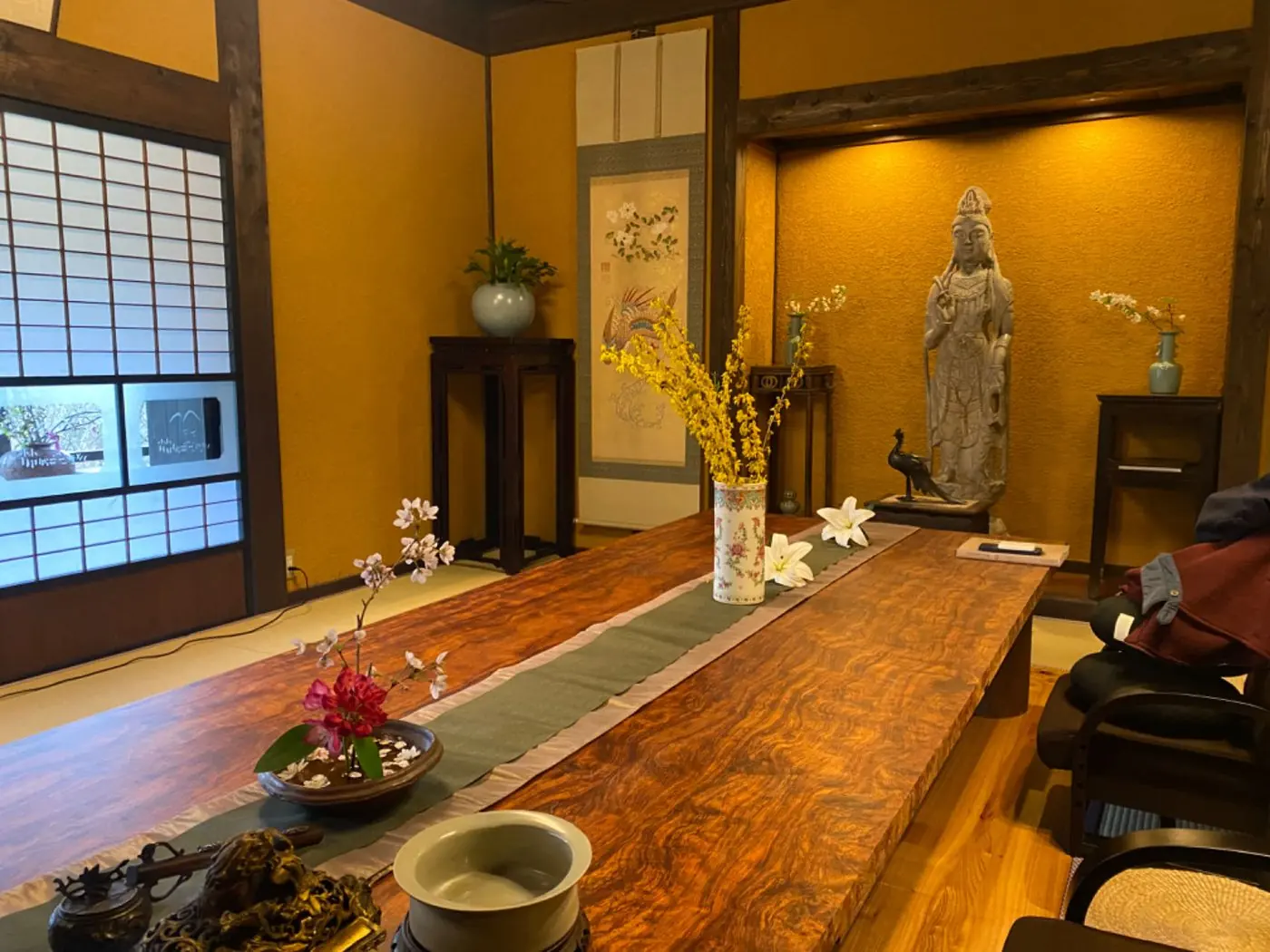
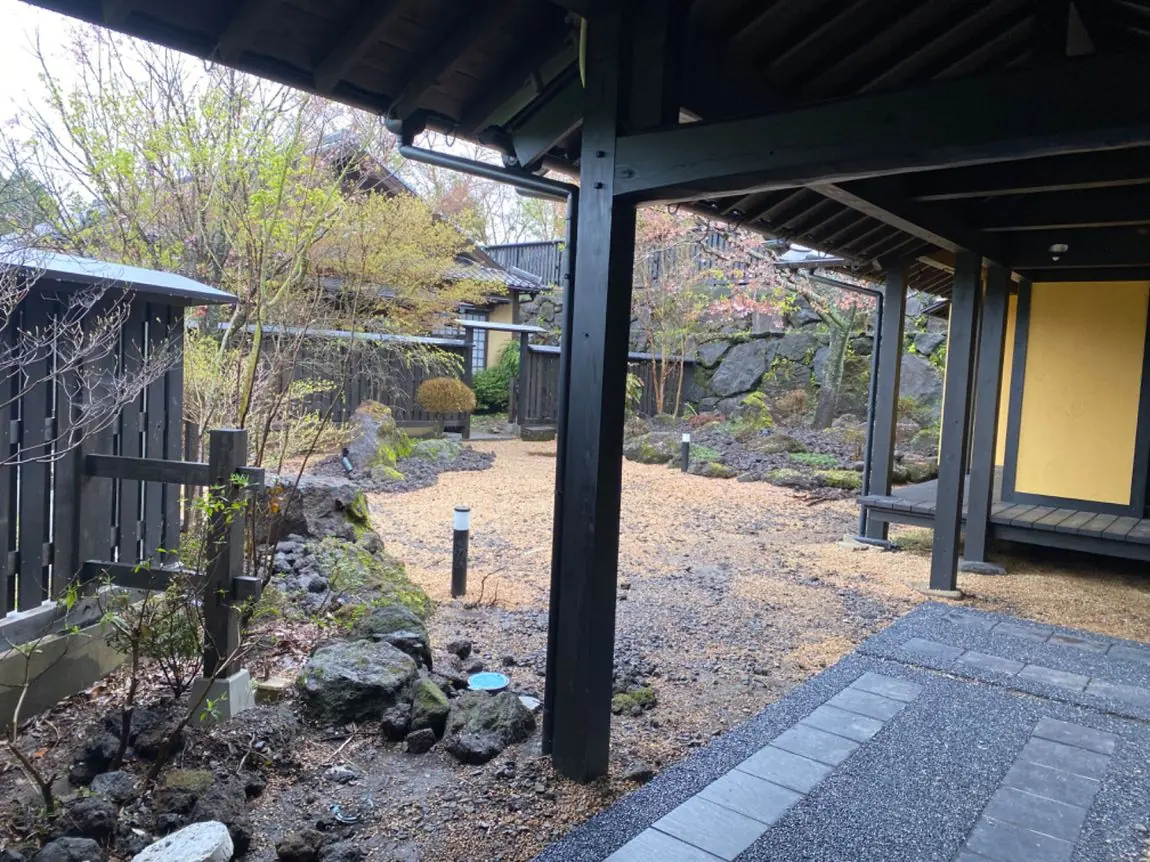
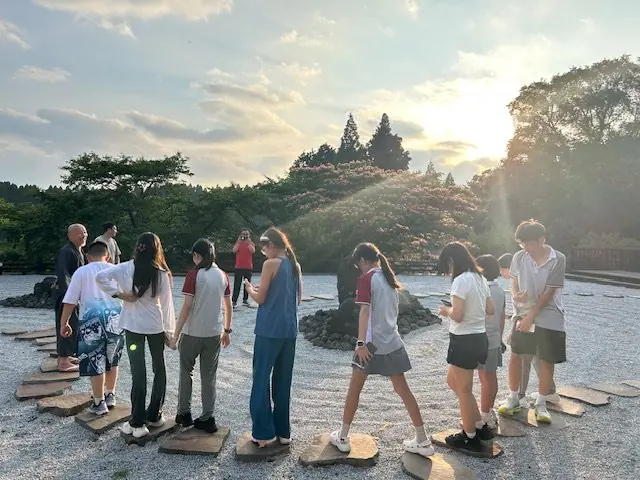
Left: the long room, where tea happens. The flowers change with the week, which is not a detail anyone announces. Right: the courtyard. Those black boulders are lava — you are standing inside a caldera, and the garden does not let you forget it.
This is the part that dies in translation, so here it is plainly.
Most cultural experiences sold to visitors in Japan are run by an agency that books whoever is free that afternoon. At Meihodo each art has a resident master, on the estate, teaching the same thing every week of the year.
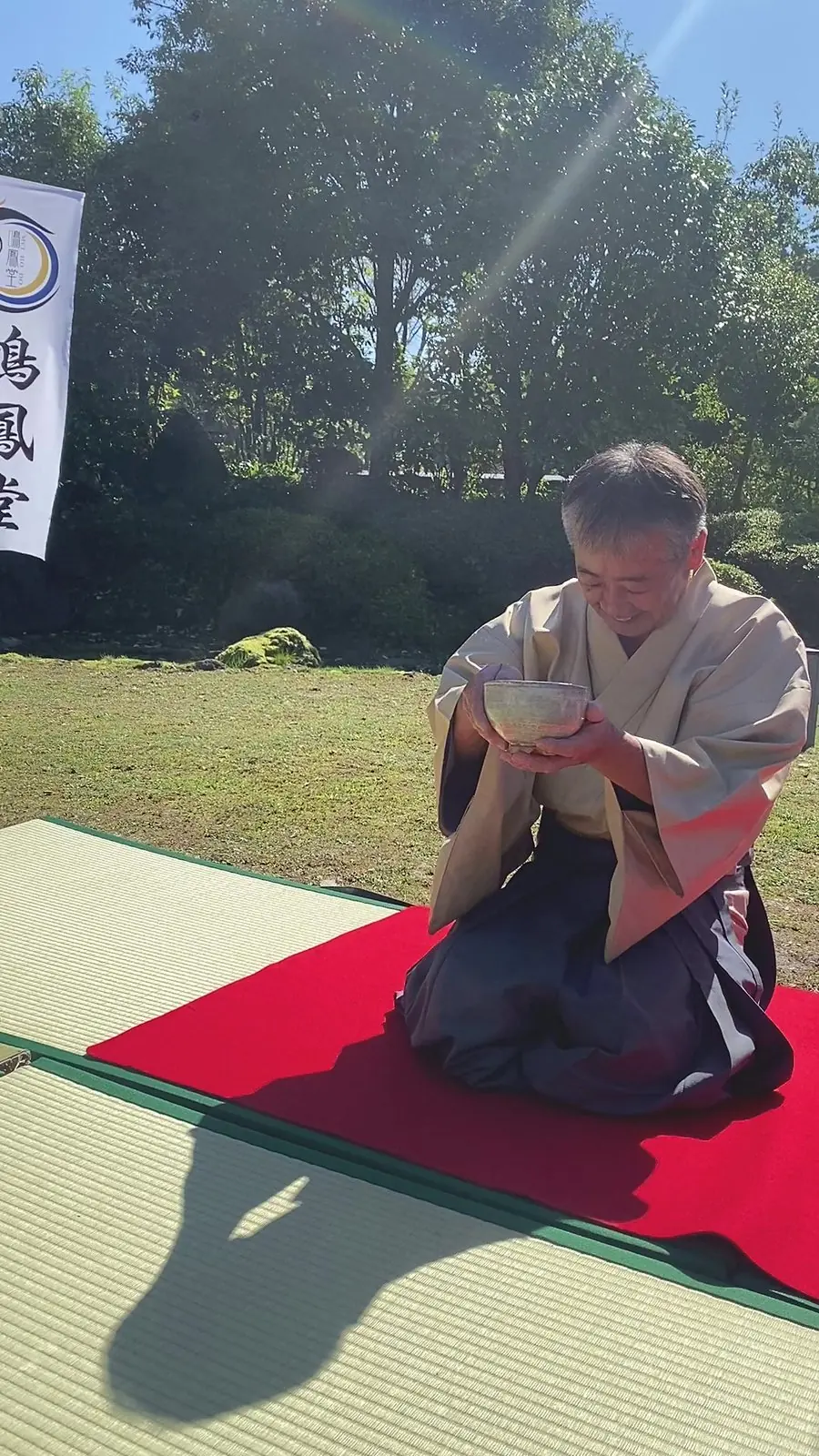
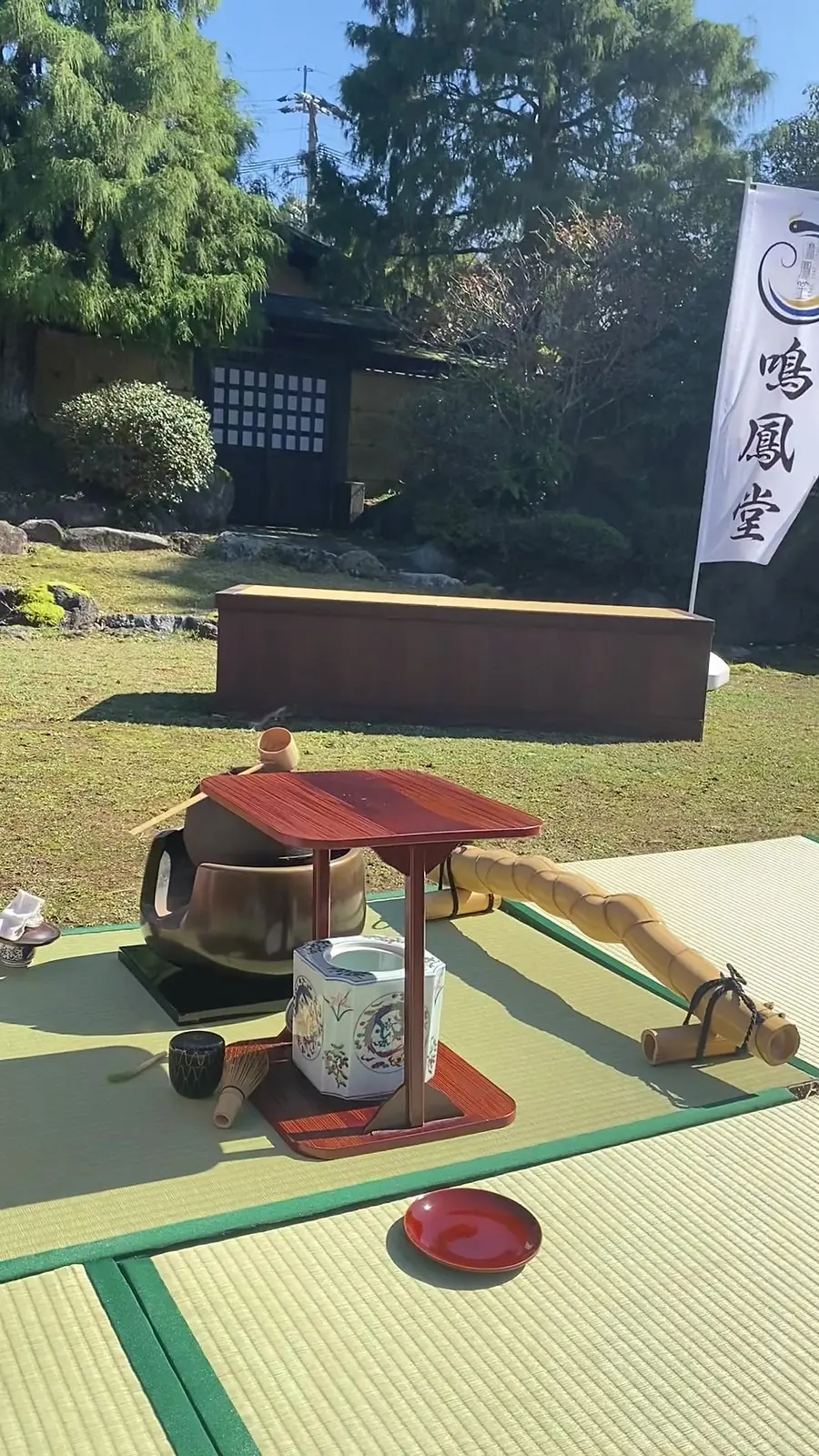
Tea is not always indoors. On a clear day the mats go straight onto the grass and the whole thing is set up in the garden — brazier, kettle, water jar, and a teacher who has been doing this longer than your children have been alive. He is not a performer hired for the afternoon; he lives with the work.
Your children will not be handed a plastic sword and photographed. They will be corrected, by somebody who minds.
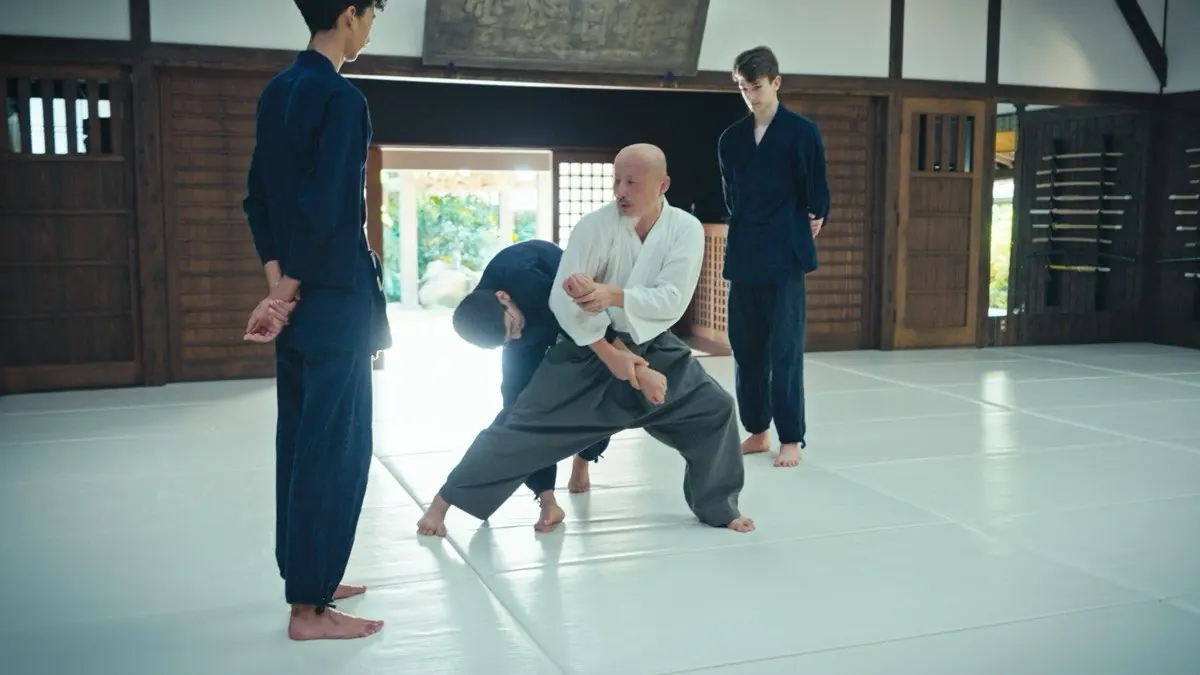
The estate keeps a host whose entire job is to sit down with your family when you get there and build the next twenty-four hours around who you actually are. Which child will love the bow, and which one needs to be outside. Whether the grandparents want tea or a nap. Whether anybody is going to last through a kendo bout after a flight.
For a family this is the real product. You are not picking from a menu on a website three months out — somebody who has watched a thousand families do this looks at yours and decides.
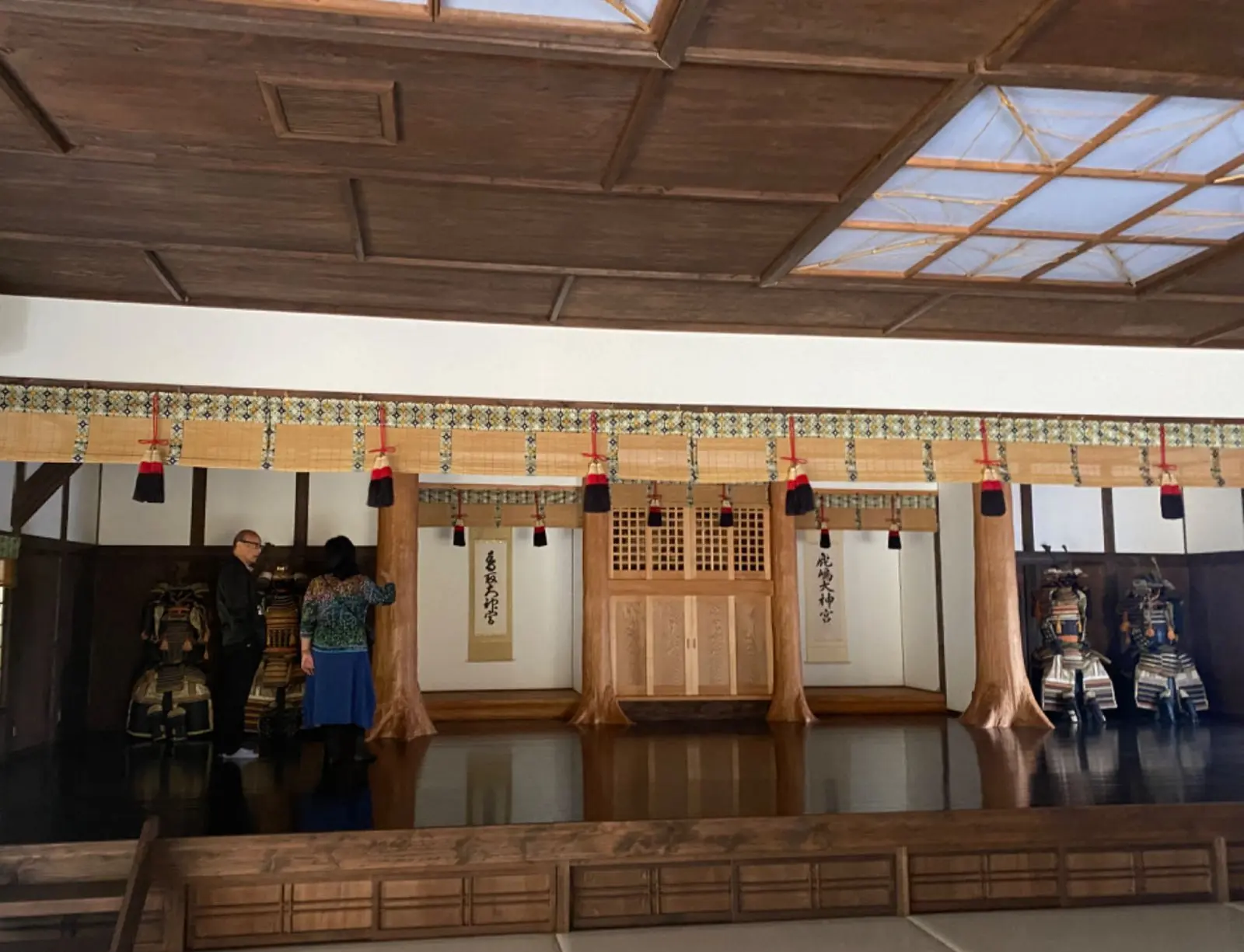
Behind the main house is a hall with a polished stage, pillars that are whole tree trunks, and a shrine with a hanging scroll on either side.
The scrolls read Kashima and Kasuga. That is not decoration — those are the shrines of the kami of the sword, and the hall was built to face them. Along both walls stand suits of armour, the real kind, the lacing gone slightly uneven with age.
It starts in a room of hanging racks, where someone who has done this several thousand times puts you into keikogi and hakama properly — arms up, obi pulled tighter than you expect, pleats set by hand. This takes a while. It is the point at which people stop treating it as dressing up.
Then iaidō, the drawing of the sword. Then tea. Then the bow — kyūdō, standing under the paper skylight.
It ends at the ōdaiko. The drum here is over two metres across, near enough seven feet, and you are the one who hits it, in a room built to resonate. Every single person remembers the drum.
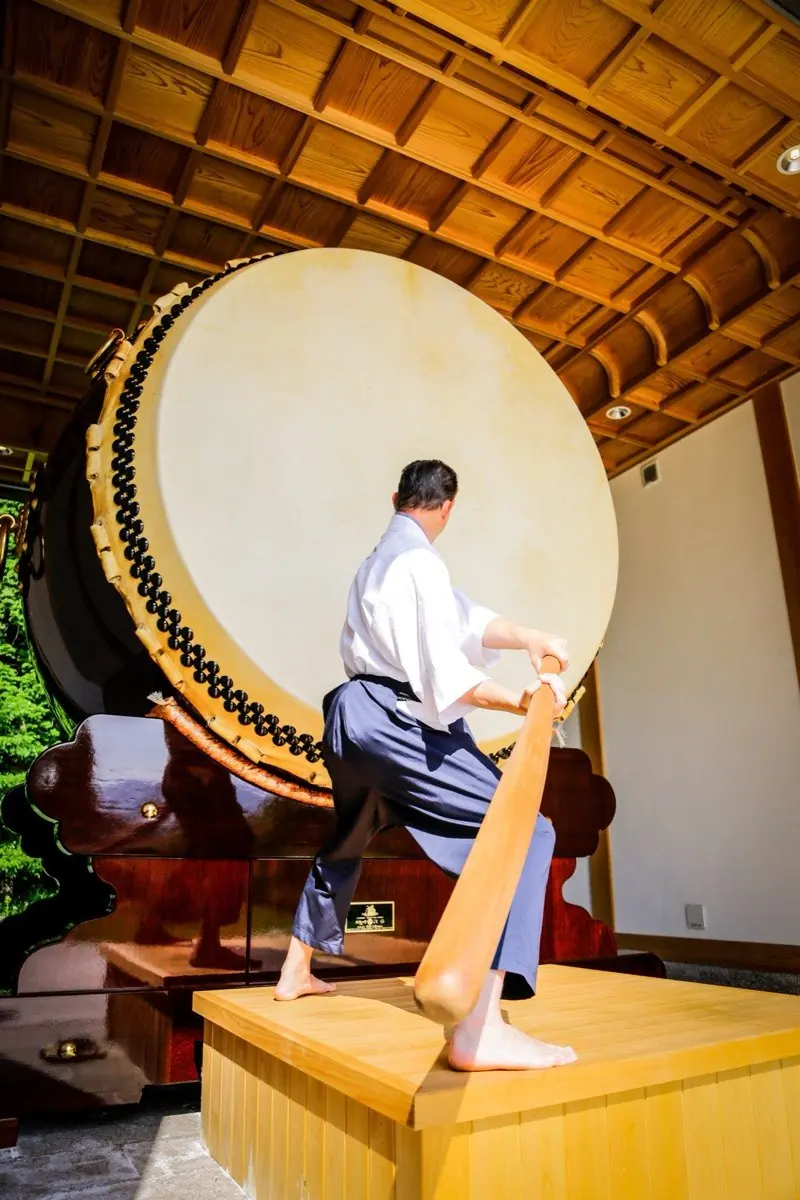
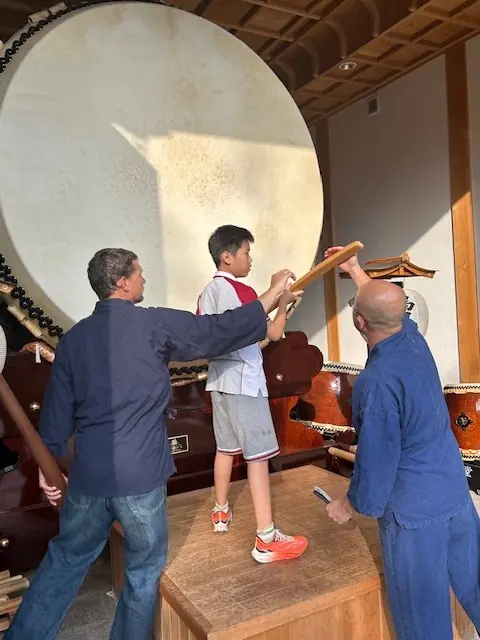
Left: how it is done. Right: your child, ten minutes later, on the same platform. Two people set the grip and then step back — nobody tells a child to be gentle with this drum, which is mostly the point of it.
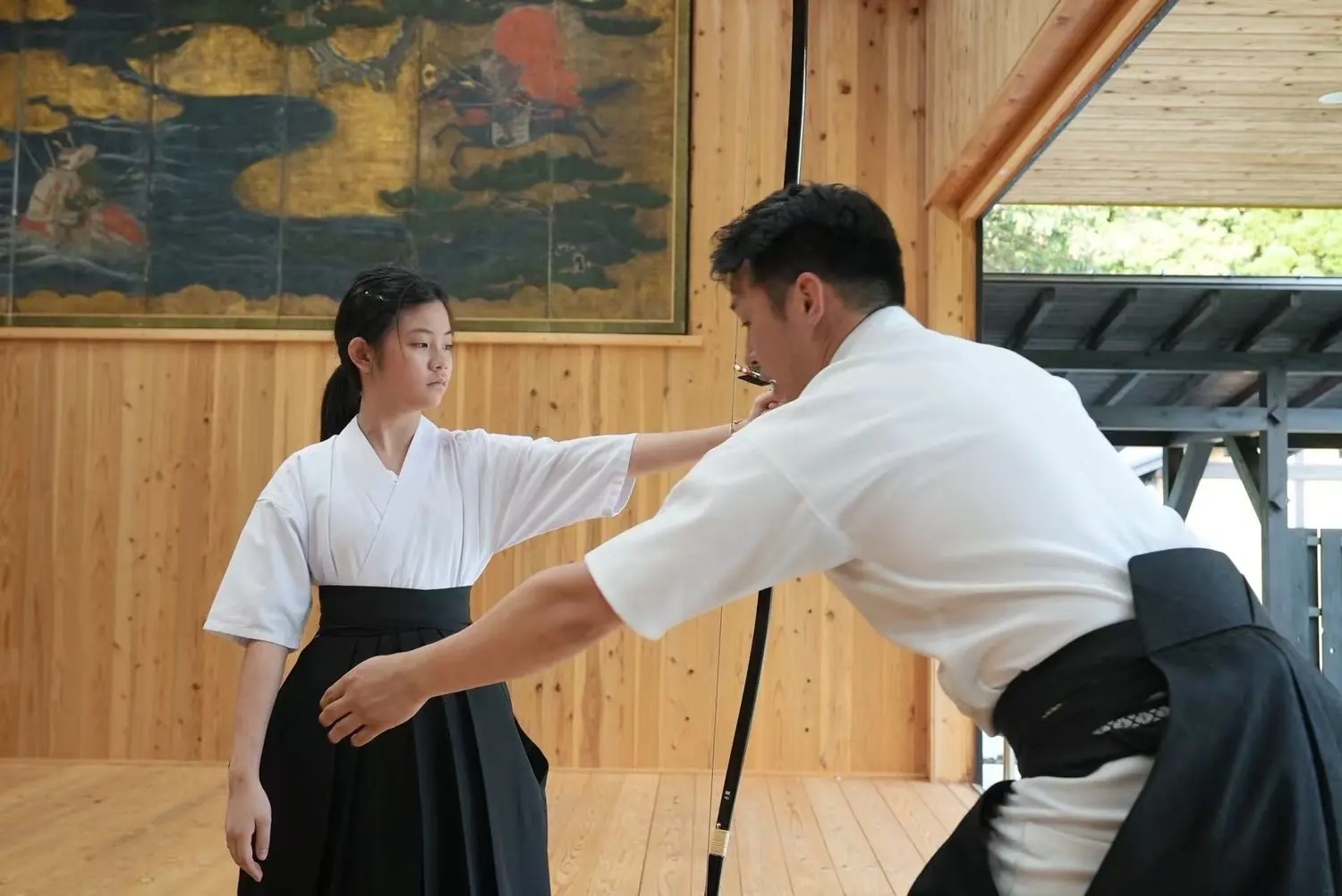
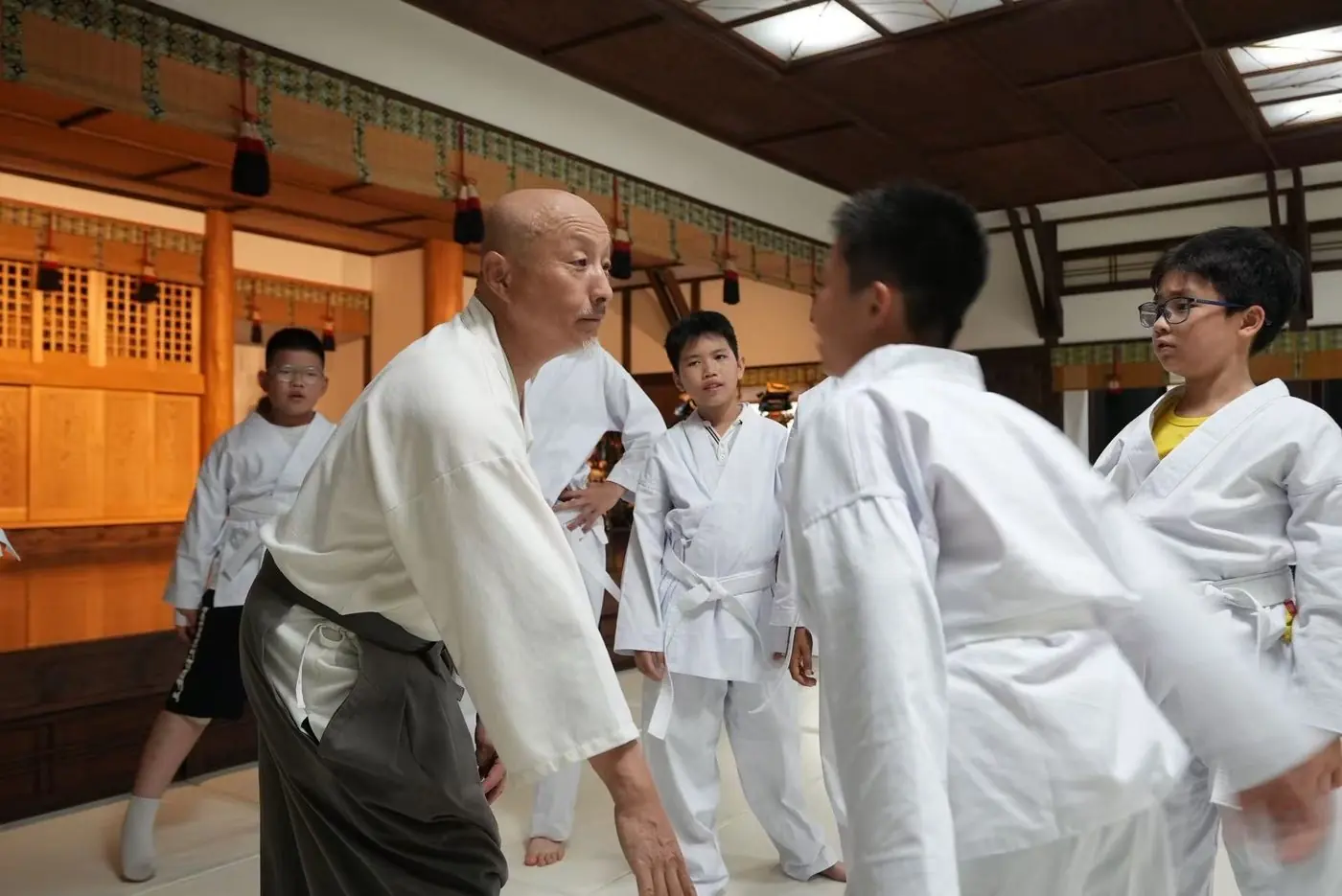
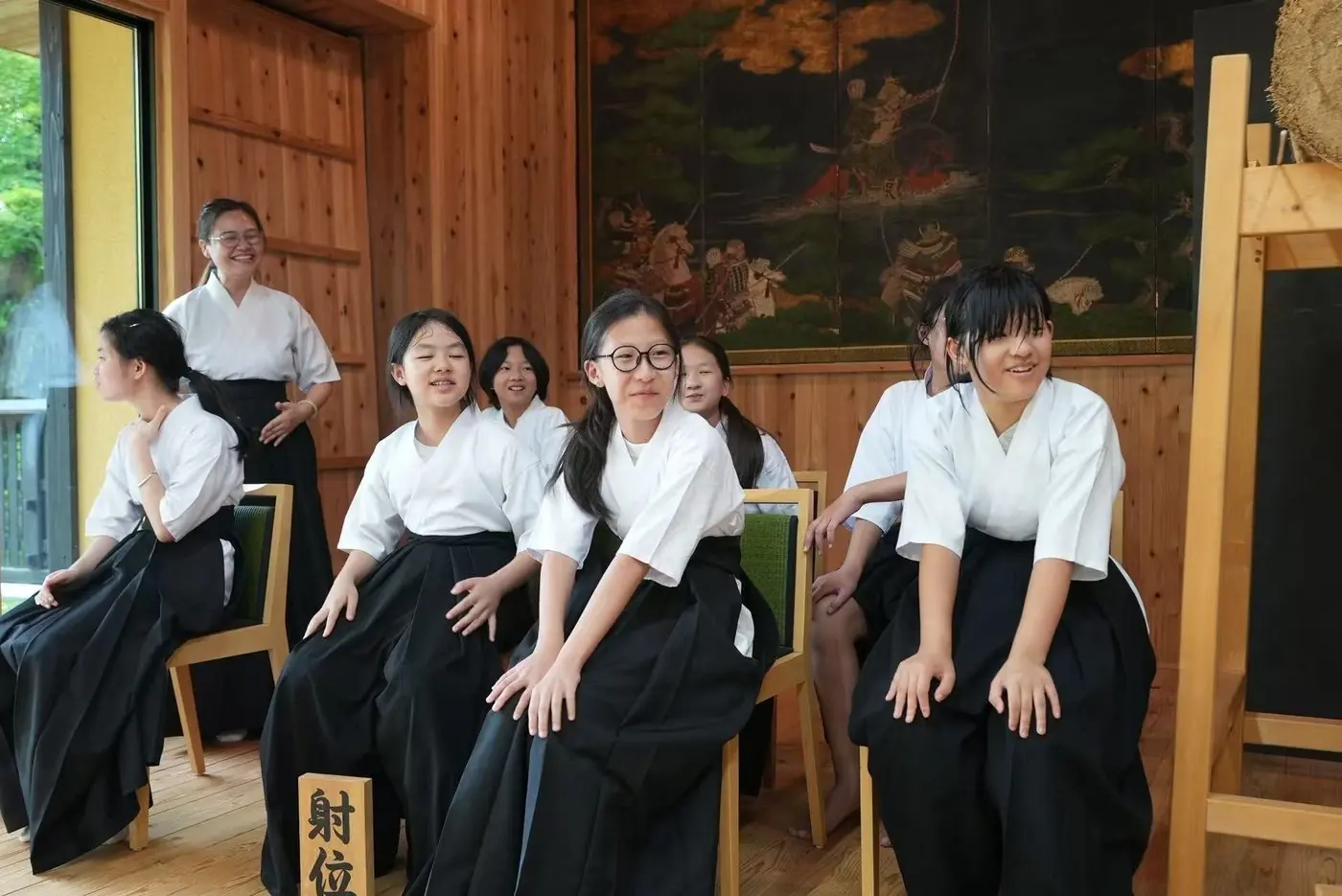
Two things are true at once in this hall, and the second one is the reason it works for children: it is taken completely seriously, and it is not solemn.
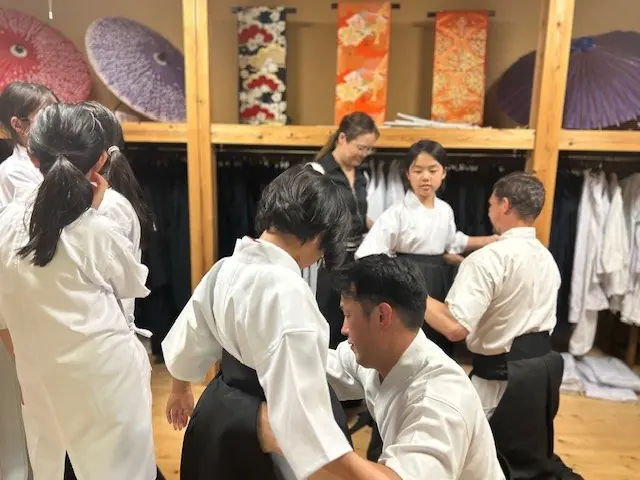
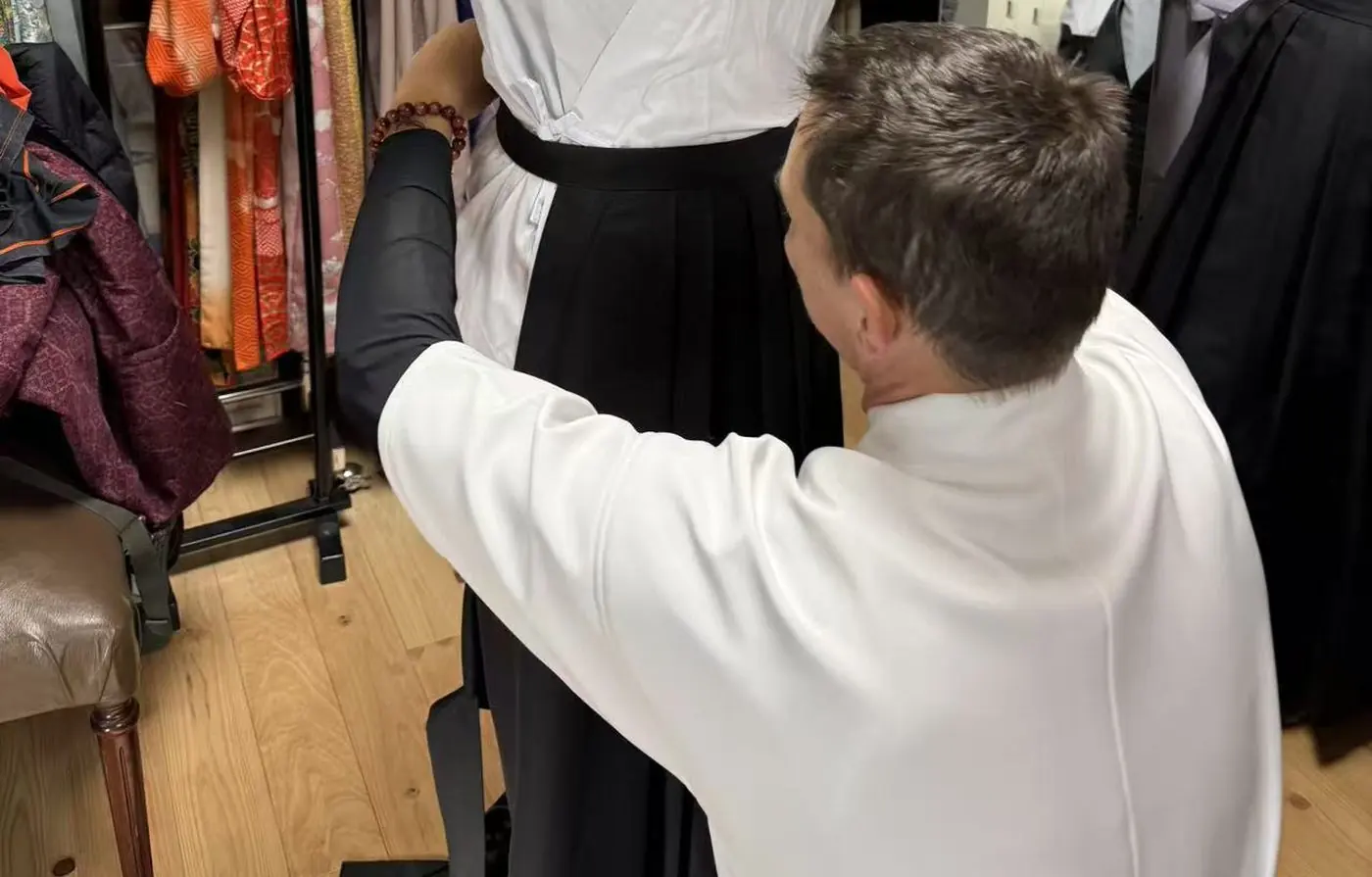
Four staff, kneeling, one child at a time. The obi goes on tighter than anyone expects, and this is the point at which people stop treating it as dressing up.
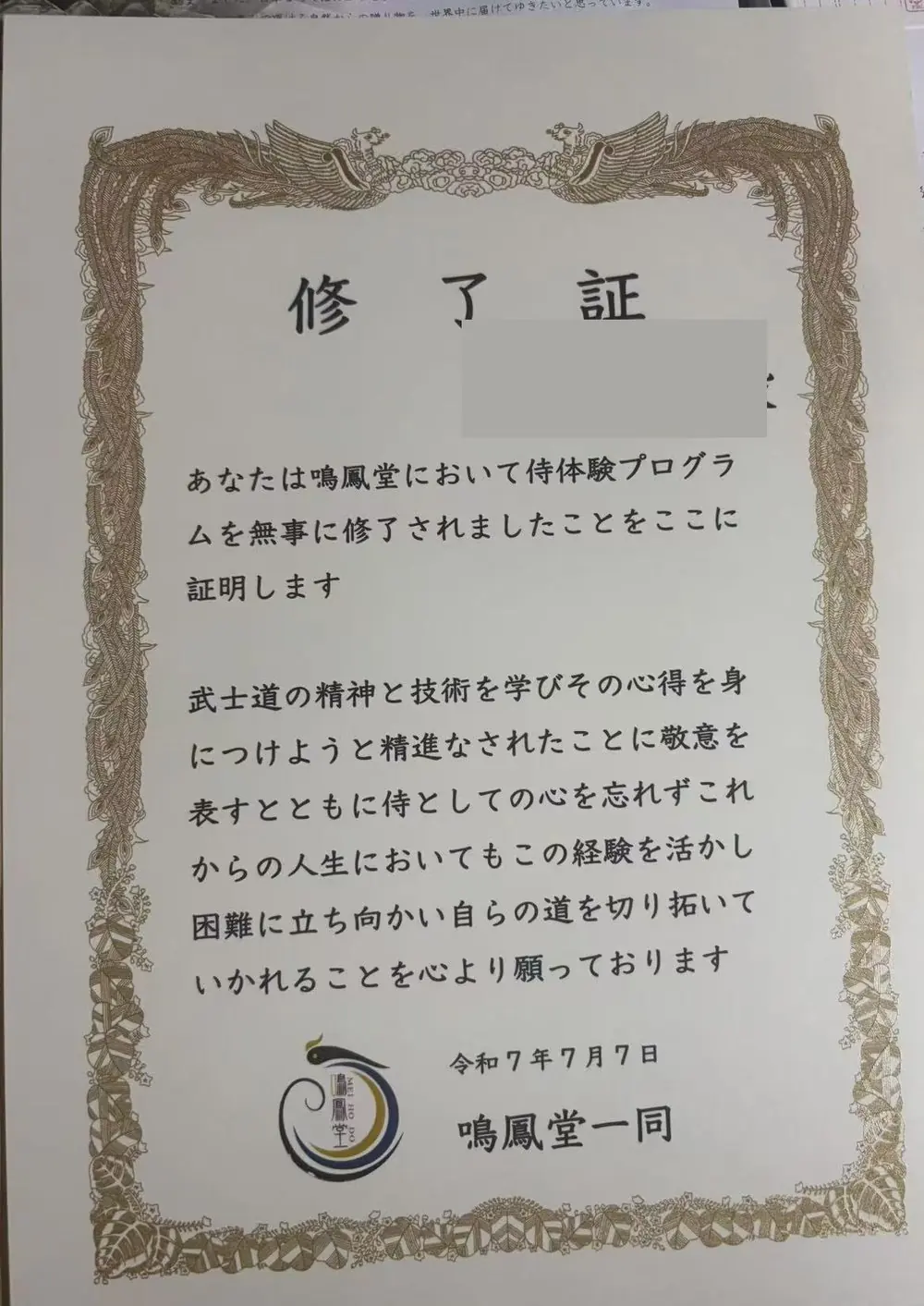
Keikogi, hakama and the certificate are included. Free cancellation to 72 hours before; after that it is non-refundable — one more reason to have somebody holding the date for you.
The published programme — the one you can find and book online — is twelve and over. That is the correct rule for a public session. A stranger's seven-year-old in a room where other people are handling live practice is a different proposition, and the venue is right to be careful about it.
Booked privately, there is no minimum age.
That is not something a booking site will ever tell you, because the booking site sells the public session. A private hall has to be arranged — in Japanese, with the people who run it, for your family on your afternoon. Which is the entire reason this page exists.
The sword work gets shorter and slower, and stays at the form rather than the speed. The bow is done with an instructor's hands on your child's hands, for as long as it takes — there is no version where a six-year-old is handed a two-metre bow and wished luck.
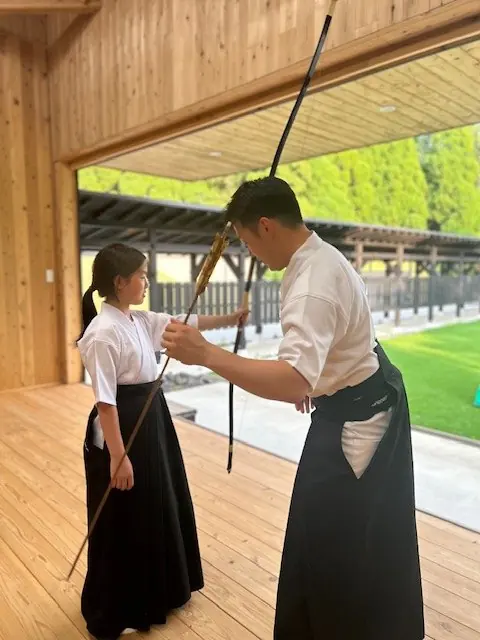
The tea gets shorter, because it has to.
And the drum does not change at all. A seven-year-old hits the same ōdaiko, in the same hall, as hard as they can. That is the part they describe to their friends, and it is the part that survives the flight home.
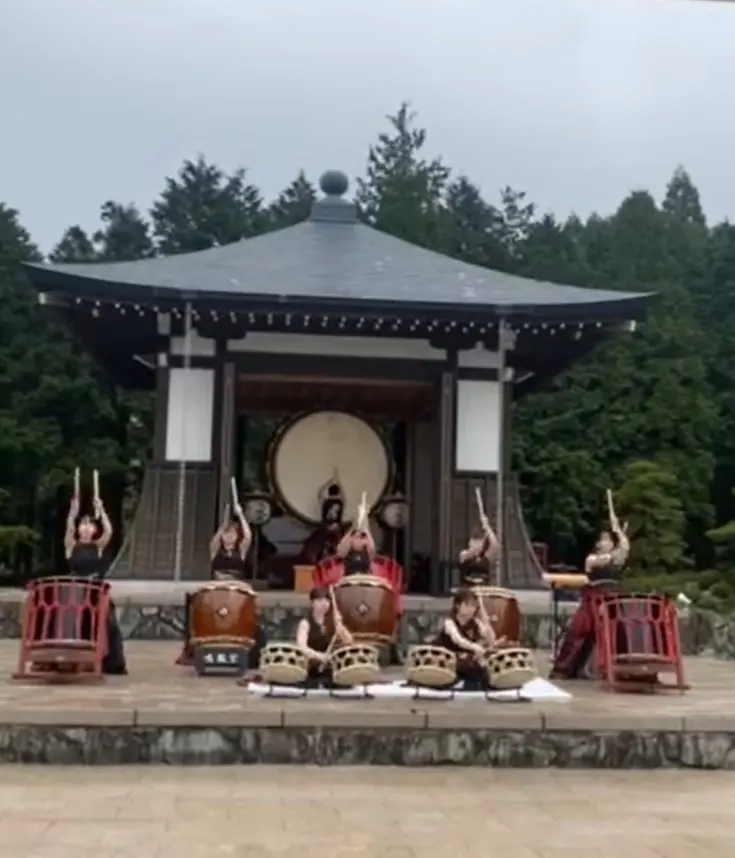
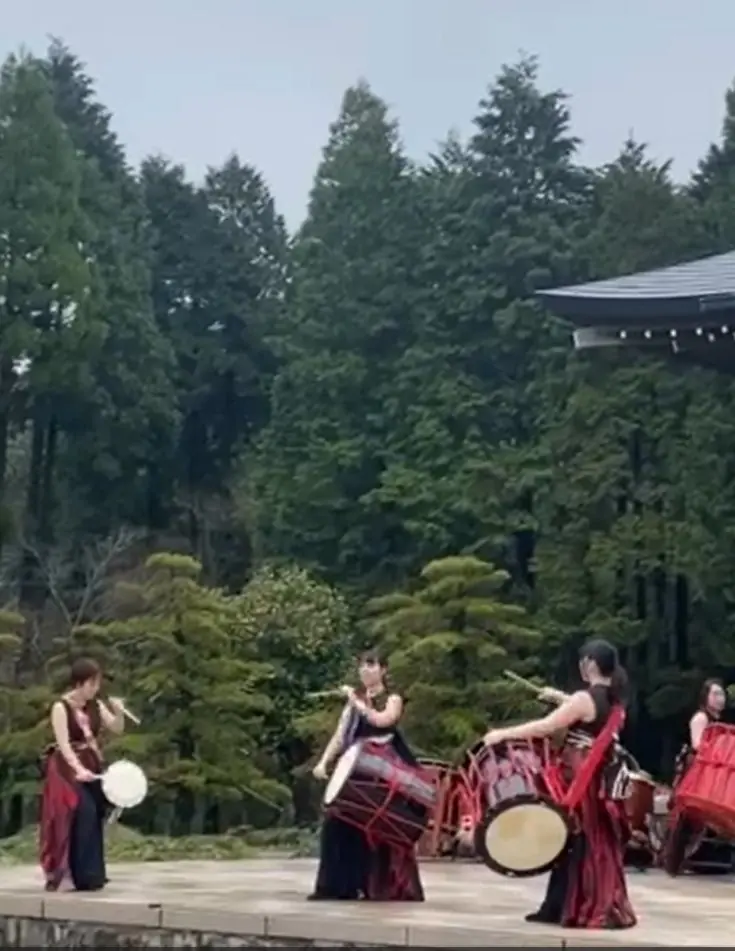
The estate has its own outdoor stage, and its own drum. On performance days a troupe plays it; on your afternoon the hall is yours and the drum is the last thing you do. If a performance falls inside your dates I will tell you — it is not something you can look up.
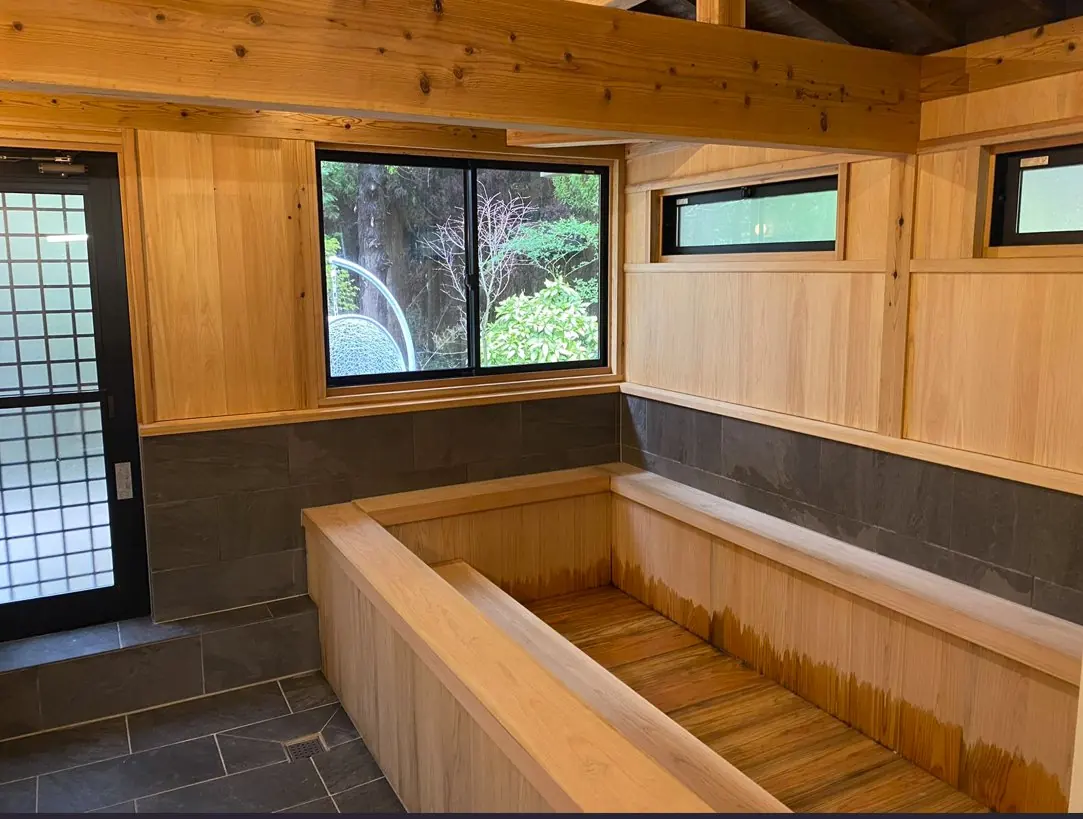
You do not stay in a room. You stay in one of four separate houses on the estate, and they are not variations on a theme.
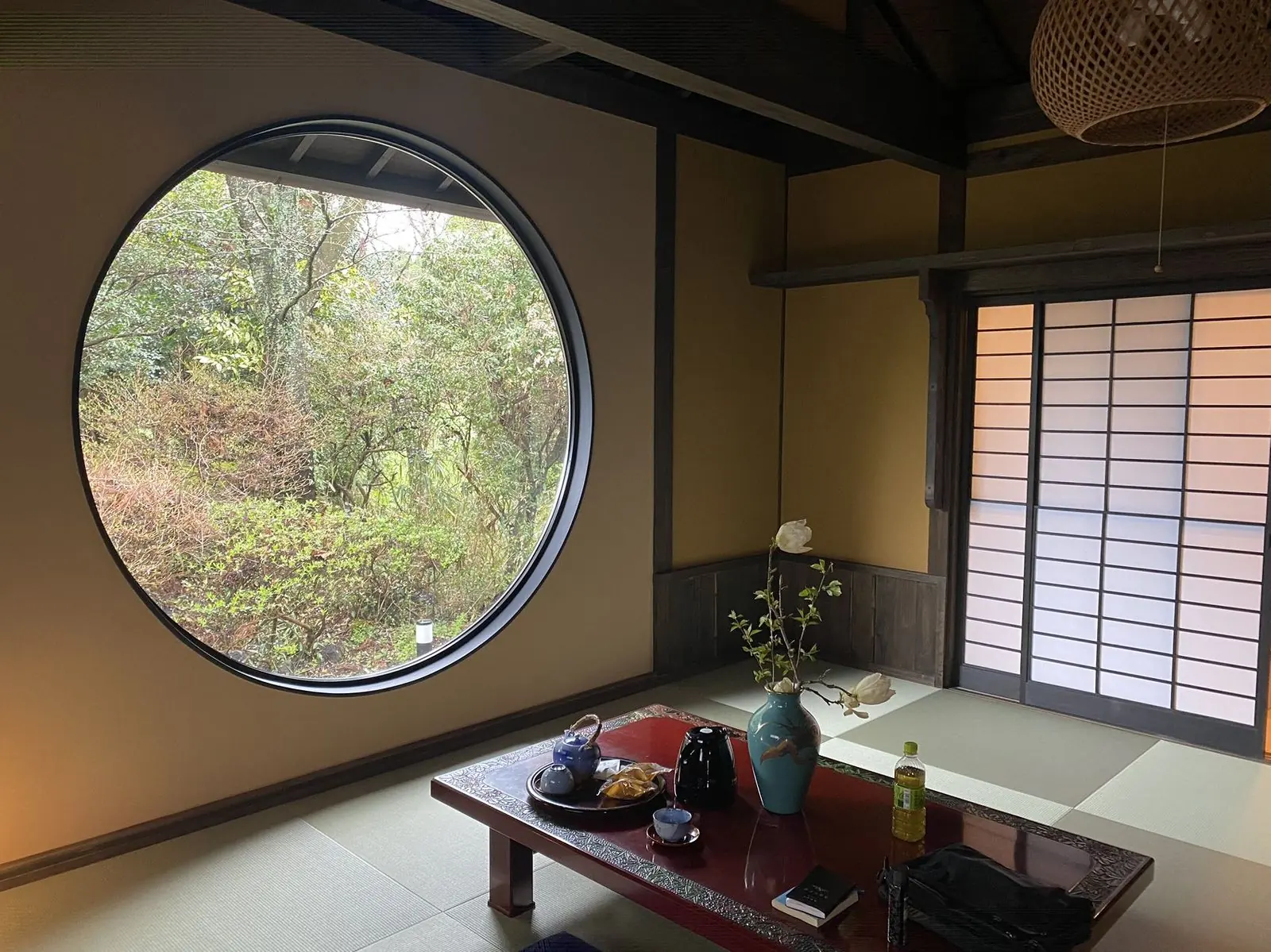
The house is assigned by Meihodo rather than chosen. If one of them is obviously right for your family, I ask.
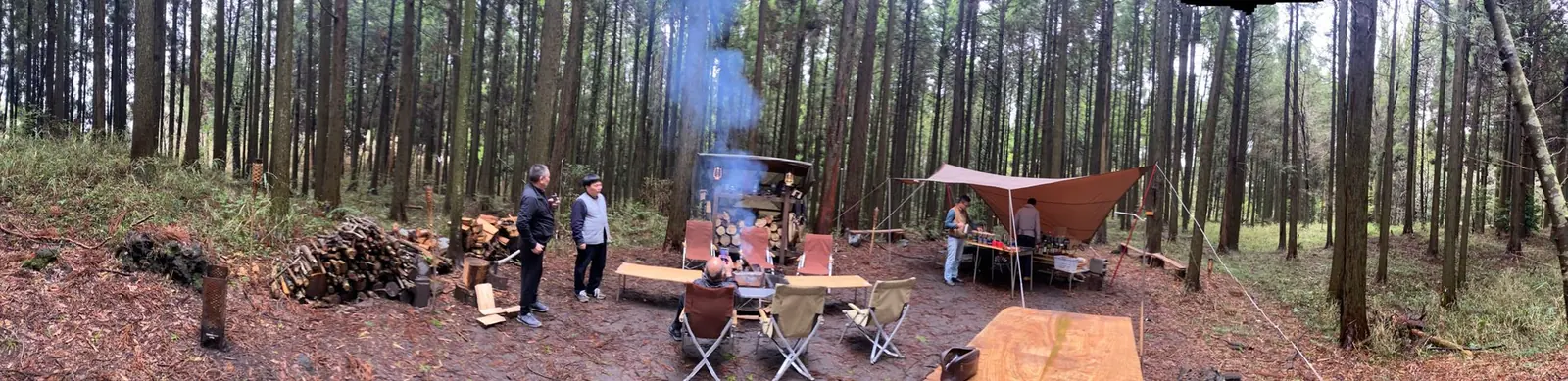
Staying the night gets you the fire. A clearing in the cedar plantation, split wood stacked higher than a child, a tarp strung between the trunks, and something that has been cooking over the flames since before you walked down.
There is a camp master — everyone calls him Davis — who will put your children to work if you let him: pitching the tent, splitting kindling, making something out of wood, cooking outdoors. Most parents expect this to last twenty minutes. It does not.
After two and a half hours of kneeling in a hakama, this is where the evening lands: chairs nobody is in a hurry to get out of, a drink for the adults, and children who have been given permission to poke a fire with a stick for as long as they like.
It is only open to guests staying at the house — which is one of the reasons the second night is worth it, and why I plan this as two nights rather than one.
Aso to Beppu Port is a drive, not a transfer — across the caldera and over the highlands, grassland on both sides and almost no traffic. Leave mid-afternoon and you arrive with time to spare.
Everyone falls asleep on this road. That is not a problem — that is the plan. They sleep in the car, wake up for dinner on the ship, and go down again in a cabin.
Beppu 18:45. Osaka 06:35. You are asleep for most of it.
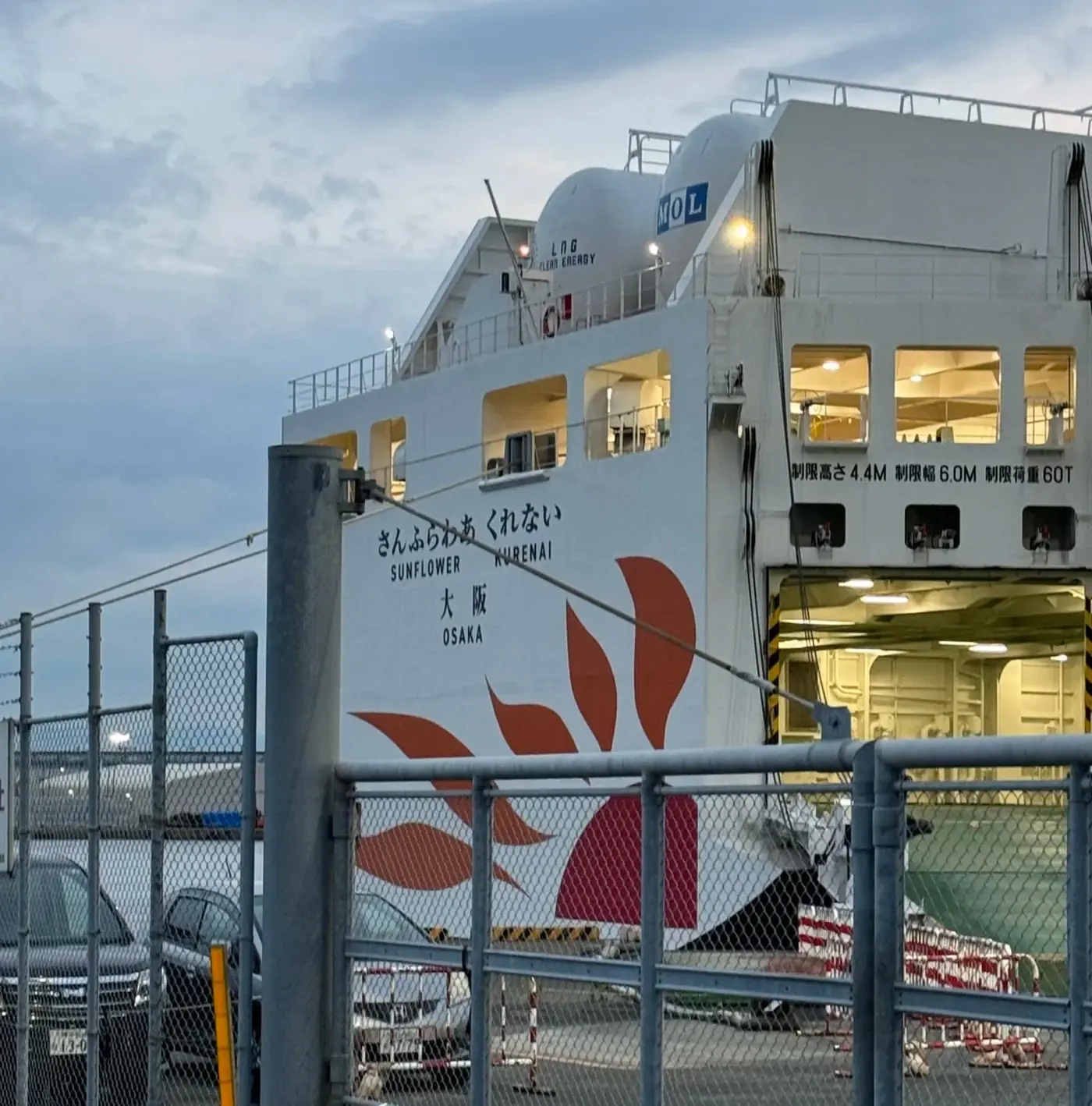
The ships on this route are Sunflower Kurenai and Sunflower Murasaki — Japan's first LNG-fuelled ferries, in service since late 2022 and spring 2023. They are not the ferry you are picturing.
They carry the first connecting cabins ever put on a Japanese long-distance ferry: a tatami room joined through a door to a western room. If you have a small child who needs an early night, a teenager who wants a door of their own, or a grandparent who would rather have a bed than a futon, that is worth knowing about.
It is also worth knowing that the connecting rooms carry a premium and are not compulsory. The standard private cabins can be held as a block, so a family still sleeps side by side for a good deal less. Which way we go depends on your budget and on who is happy sharing with whom — and it is one of the easier places to save a few hundred dollars that nobody will notice on the night.
There is an observation bath twice the size of the one on the old ships, a restaurant, and a deck. After a week of trains, being able to walk around for an hour matters far more than you would expect.
And your car drives on with you — which is the part that is hard to appreciate until you have done the alternative.
You drive up the ramp. You park on the vehicle deck. You take out what you need for one night, leave the rest in the boot, and step into a lift that opens directly into the ship's lobby. Car deck, lift, lobby. That is the entire transfer.
No luggage forwarding. No coin lockers. Nobody hauling four suitcases up a platform ramp at Hakata while somebody's water bottle rolls away down the stairs.
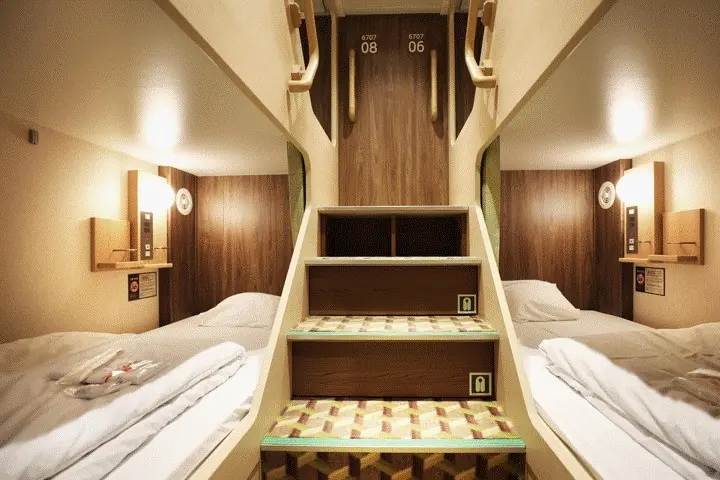
Left: the basic four-berth cabin — two beds down, two up the steps, and the whole family in one room. It is not the expensive option; it is the one that works, and it is what I book unless you ask otherwise. Right: 05:40, coming into Osaka.
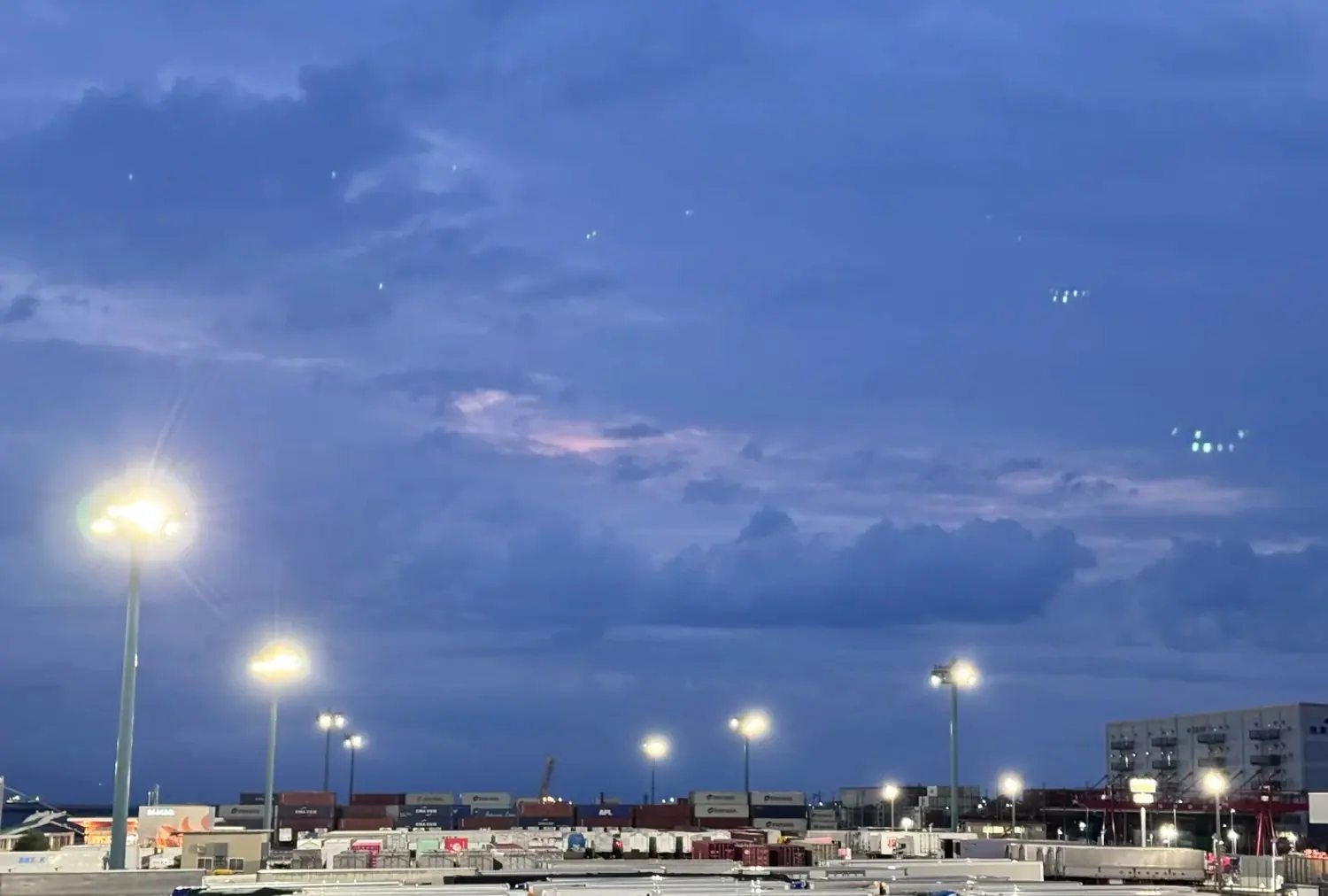
Right: the deck, in the half-light. Not a beautiful photograph, and that is rather the point — it is a working port, not a postcard, and you are standing on it with an entire day in front of you that you did not think you had.
A Sunday-to-Thursday sailing. Friday and Saturday run 35 minutes later throughout.
Not because it's secret. Because four separate things have to agree with each other, in Japanese, months in advance.
Meihodo is not a hotel with inventory. Dates are held by conversation, and the conversation happens in Japanese. The hall then has to be taken privately for your family — which is what lifts the age limit, and which is not a thing any booking engine offers — on the right half of the right day, non-refundable inside 72 hours. By the time a property this small shows availability on an English booking site, the dates you wanted are gone.
Passage on the ferry is easy to buy. A connecting cabin on a school-holiday sailing is not — there are very few of them, they are the first thing families book, and they sell on a Japanese-language system that does not hold space while you think about it.
Rented in Kumamoto, carried across on the ferry, returned in Osaka. That is three separate agreements — the rental company's one-way terms, the vehicle booking on the ship, and the insurance that has to cover a car on a vessel. Each is ordinary on its own. Together they are where DIY plans quietly fall apart.
Miss the check-in cutoff and the answer is tomorrow. Everything downstream — the Osaka hotel, the Kyoto day, the flight home — is built on this one departure leaving with you on it. The schedule has to be built backwards from 18:45, with slack in the right places.
My company is a licensed travel arrangement operator in Japan. This is precisely what the licence is for: I hold the dates, make the calls, and take responsibility for the pieces lining up — so that on the day, all you have to do is drive to the port.
The three-night shape on this page is the better version. It is not the only one.
There is a one-night, two-day package that works from either side of the country, and it exists because plenty of families simply cannot give Kyushu three nights.
The house is assigned by Meihodo on the one-night package rather than chosen.
Two days is enough to be changed by the place. Three is enough to stop performing for it.
It works because of what comes before and after it. A typical shape for a family of four with two weeks:
The crossing is what makes the Kyushu half affordable in days. Without it, those two nights at Aso cost you a third day in transit — and most families cut Kyushu entirely rather than pay that.
Tell me who's coming, how old they are, and roughly when. I'll tell you whether this segment fits your dates, what the whole trip would run, and whether you need me at all.
Email meLicensed travel arrangement operator, Japan · I take four families a month