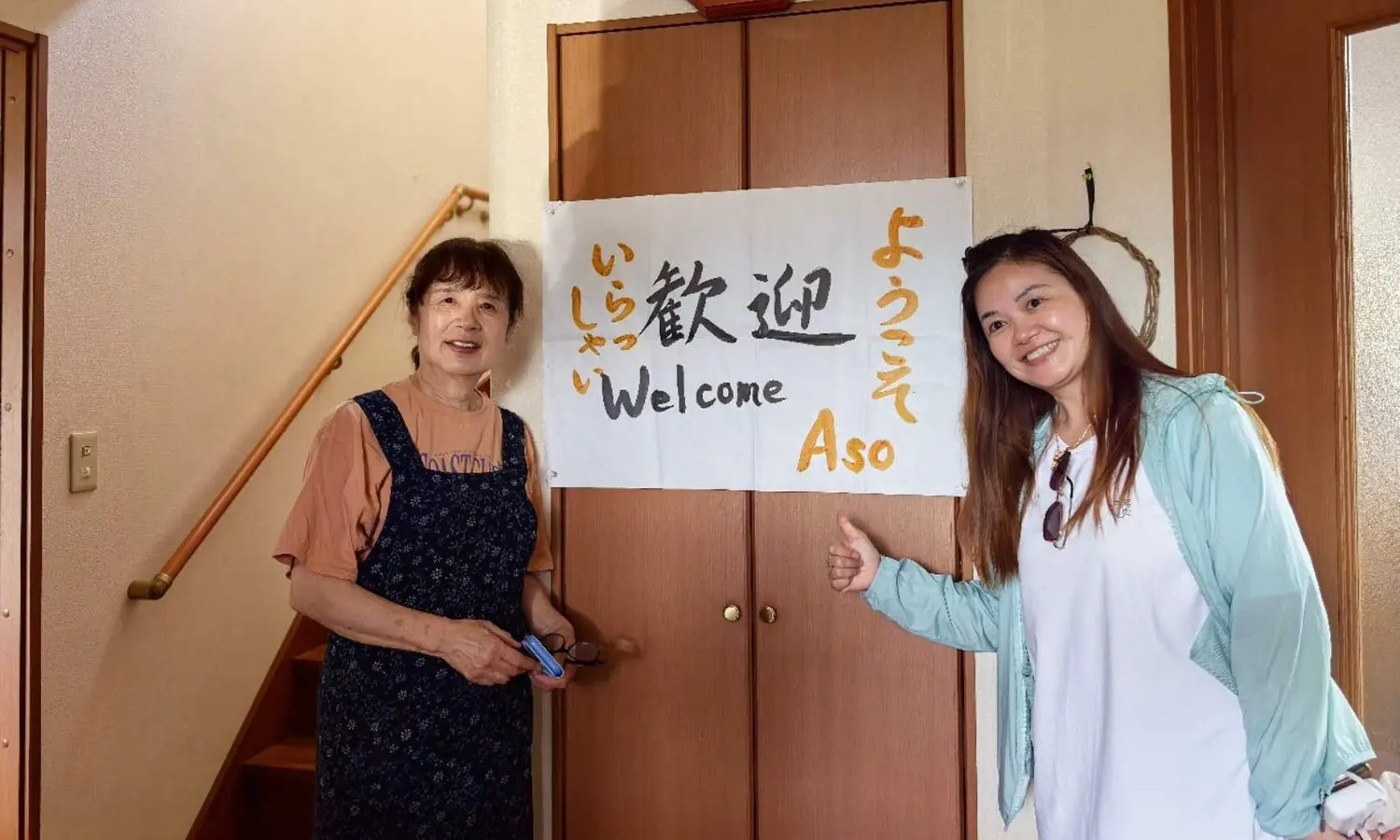
One night in the houses of working farm families on the floor of the Aso caldera — placed by the foundation that exists to keep the Aso grassland from turning back into forest, the same way it places Japanese school groups. There is no listing, no English page, no booking site. There is also a rule: it does not work for one family. It works for two or three.
It is the one thing you cannot book.
You can book the ryokan. You can book the kaiseki, the tea ceremony, the guided walk, the "local experience" run by somebody who has run it four hundred times and is very good at it. All of that is real, and all of it is a performance with you in the audience.
What you cannot book is an ordinary Tuesday evening in somebody's house — where dinner is whatever the grandmother made because that is what was in the kitchen, the television is on in the corner, and the grandfather fetches a go board down off the shelf because he plays go.
That evening exists in Aso. It is licensed, inspected and insured. It is simply not for sale.
You will have spent two days driving across the Aso grassland before you get here, and you will have assumed it is wild.
It is not. Twenty-two thousand hectares of it — the largest expanse of grassland in Japan. Left alone, in this climate, it would be closed forest within a generation. It is grassland because it is burned every spring, and has been for at least a thousand years: the 延喜式, a legal code compiled around the year 927, already records pasture at Aso.
The burning is done in March by the farming households of the caldera, on foot, with beaters, along firebreaks they cut by hand the previous autumn. There are fewer of those households every year. Which is why, in 1995, a public-interest foundation was established for the specific purpose of keeping it going — 公益財団法人阿蘇グリーンストック, the Aso Green Stock Foundation: volunteers for the burning, broadleaf replanting, the red-cattle owner scheme, and school groups placed in farmhouses.
That foundation is who assigns your household. You are not booking a room from a host. You are being placed, by a conservation body, with one of the families whose ordinary work is the reason the landscape you came to photograph still looks like that.
This is the part I would rather tell you now than after you have got attached to the idea.
To make this happen, the foundation has to contact the households, confirm who can take whom, hold the matching ceremony, and keep somebody available on the phone throughout. For a family of four, no one will do that — and they are right not to.
For eight to twelve people spread across three farms, they will.
So this is not something you do alone. It is something you do with the family you travel with, or the two families your children are already inseparable from. Each household takes a few of you; you are in different houses, ten minutes apart, comparing notes at breakfast the next morning.
That constraint is also the answer to the obvious question — why has nobody sold you this before. The product does not fit a single booking, so no booking site can carry it.
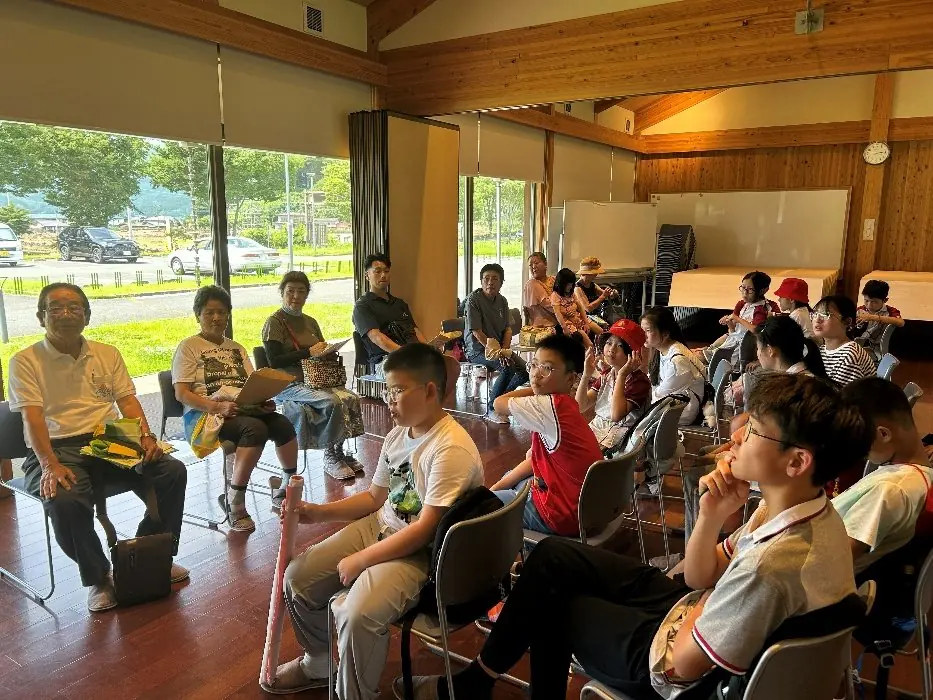
You are driven to the community hall. The host families are already there. Somebody from the foundation reads out names, household by household, and one by one you cross the room and meet the people you are staying with.
Then you get in their car.
The first ten minutes are uncomfortable for every parent who has ever done this — your child is walking off with strangers, in a language nobody in your family speaks, into a house you have not seen. The second ten minutes are not, and by the time you are sitting at their kitchen table it has stopped being strange.
The next morning there is a closing ceremony in the same hall, and somebody always cries. It is not usually the children.
This is the whole point, and it is also what makes it hard to sell — there is no itinerary to show you.
What there is instead: a kitchen, a table, a grandmother who has been cooking since four, and an evening that goes wherever it goes.
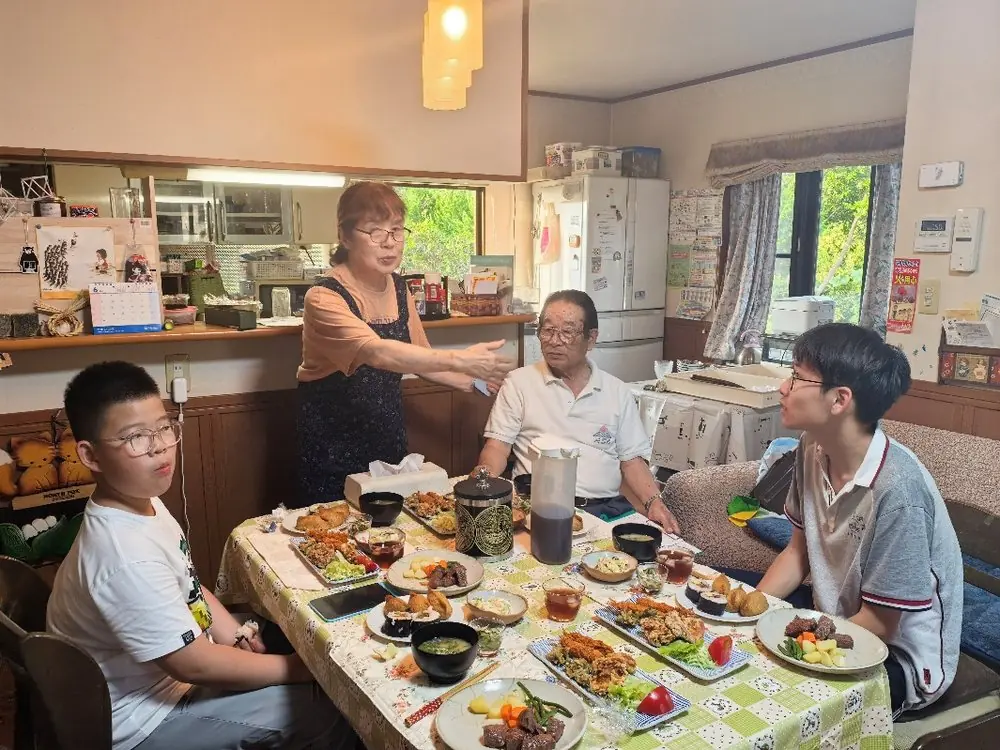
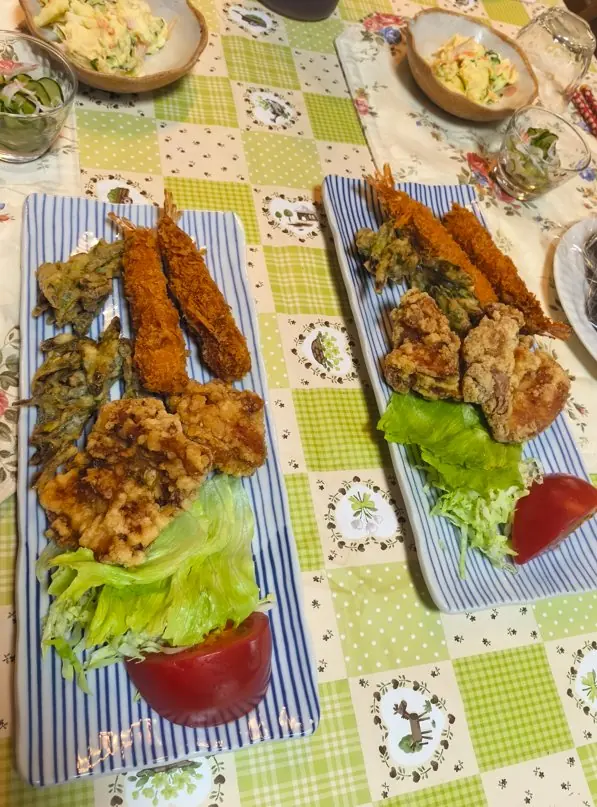
Everyone at the same table, including the grandparents, including the people who cooked it. Nobody is serving you.
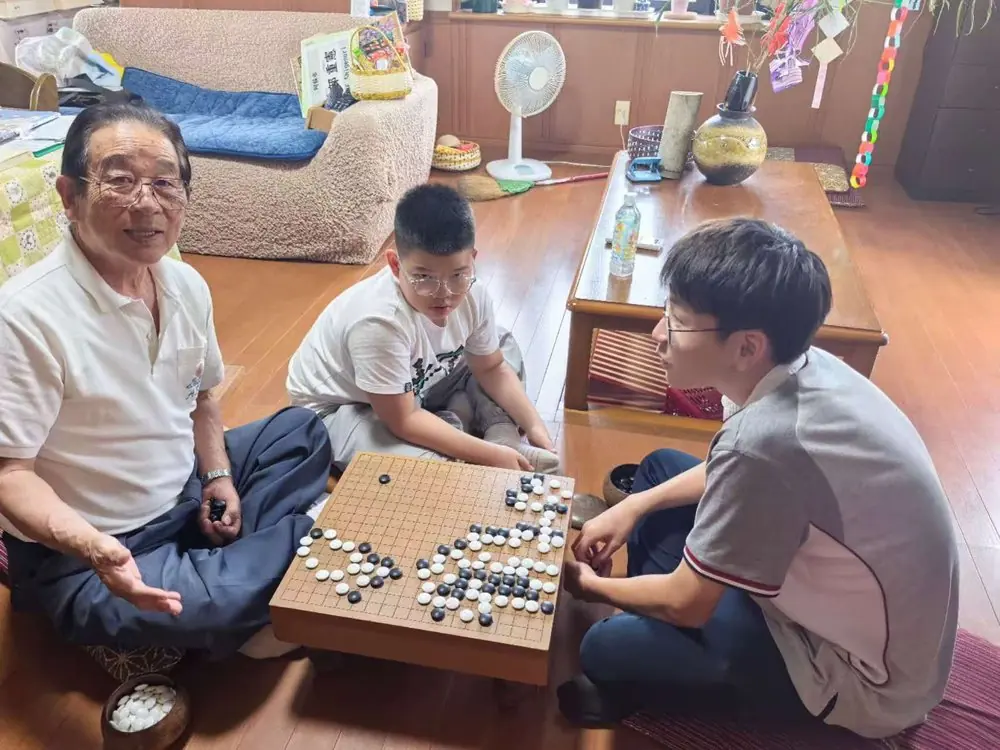
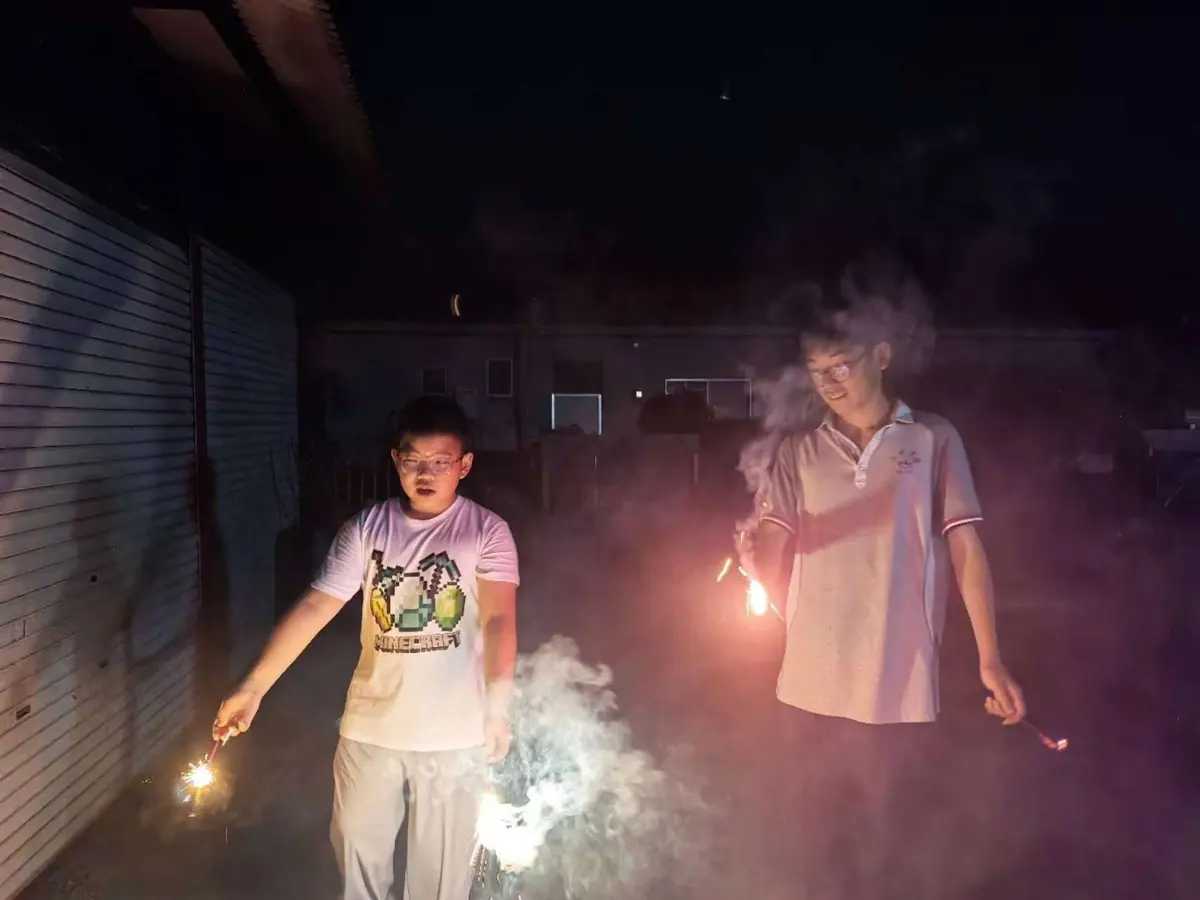
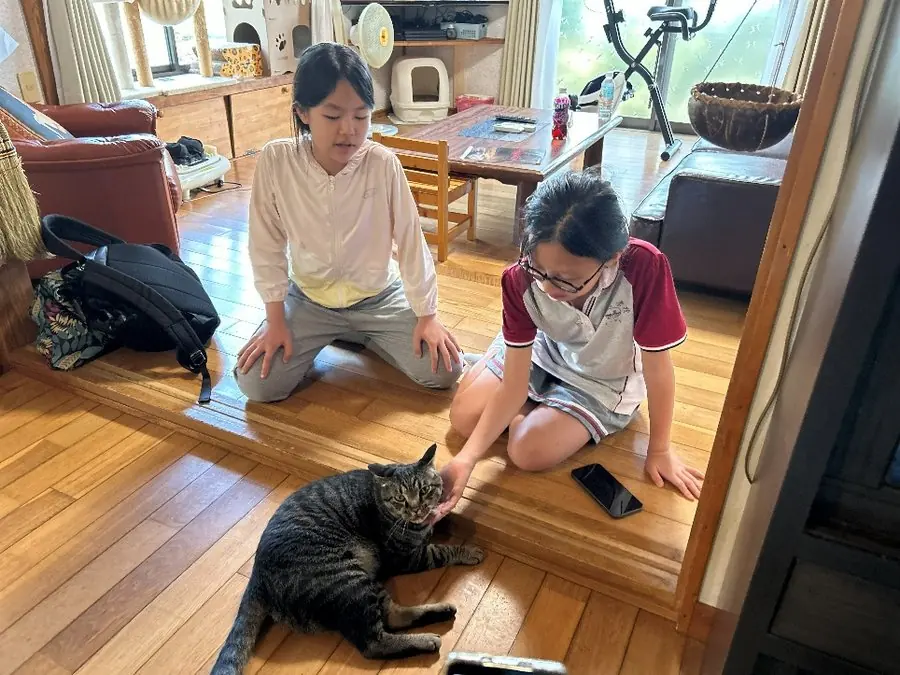
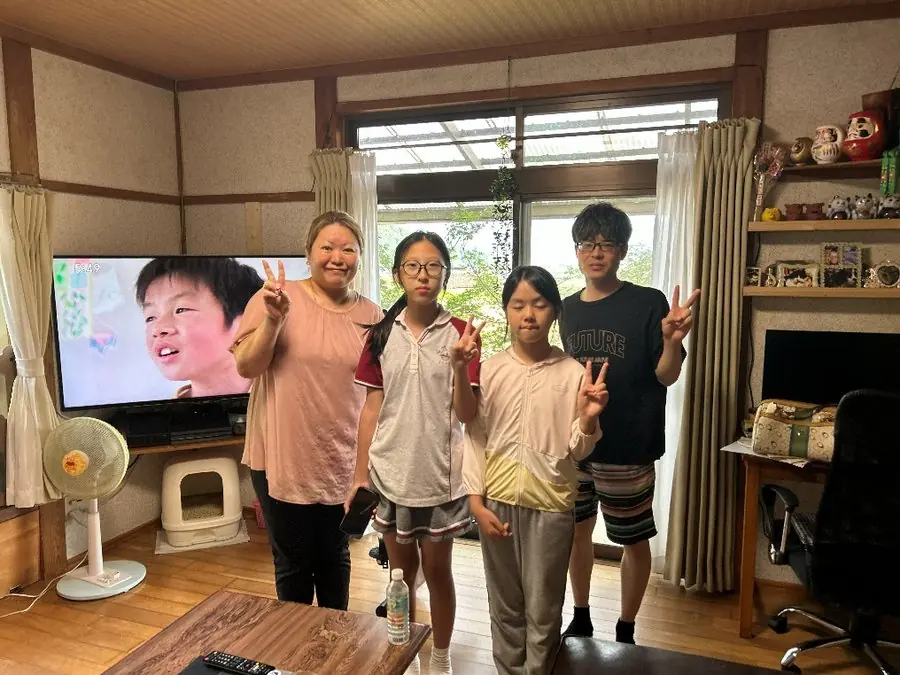
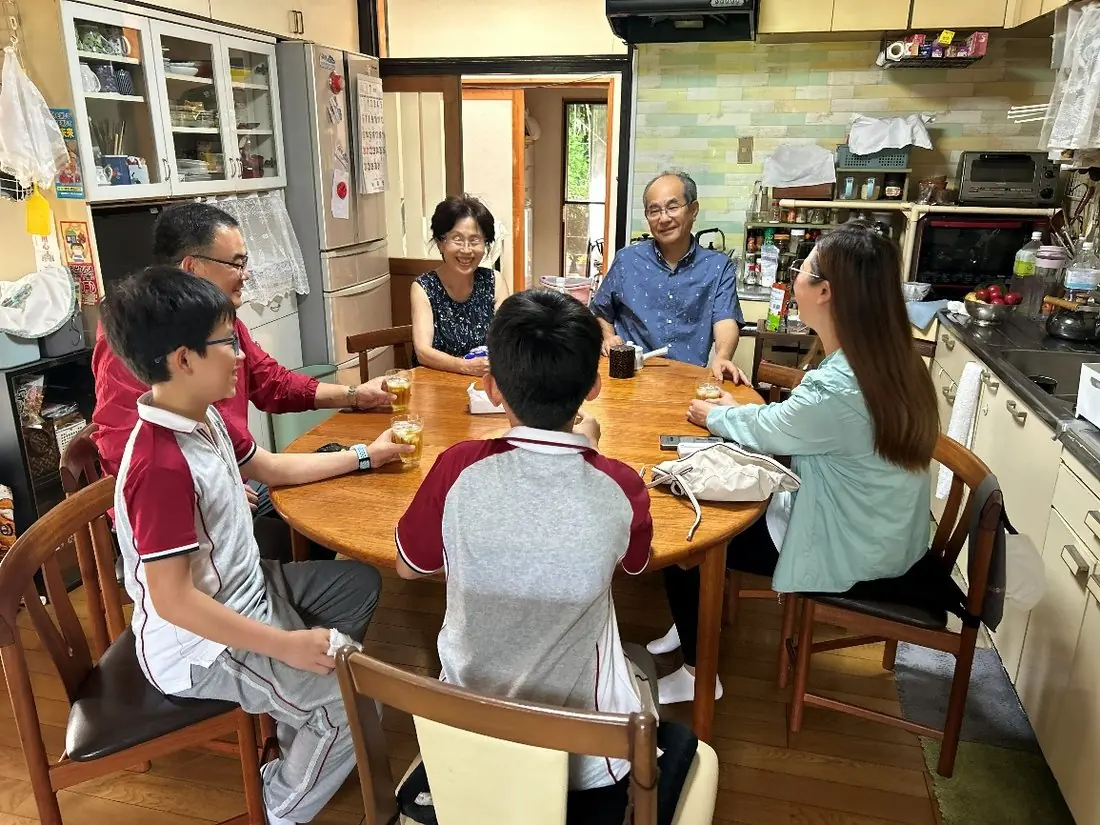
The cat, and the living room at the end of the evening. Note the television. Nobody turned it off for the visitors, and that is the single best thing about the whole arrangement.
Breakfast is at whatever time the household eats breakfast. After that, what your children do depends entirely on which house they landed in and what time of year it is — the vegetable beds, the shed, the greenhouse, feeding something, carrying something, being shown how a thing works by somebody who has no interest in simplifying it for them.
It is the opposite of the estate up the road, where everything is precise and every art has a master. Here nothing is precise. That is the pairing, and it is why I put the two together.
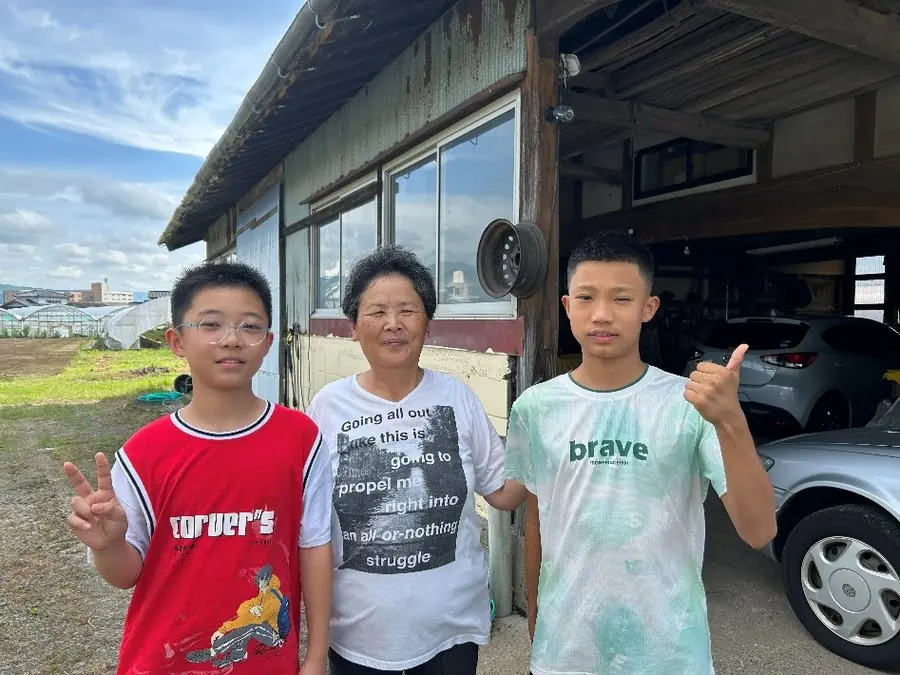
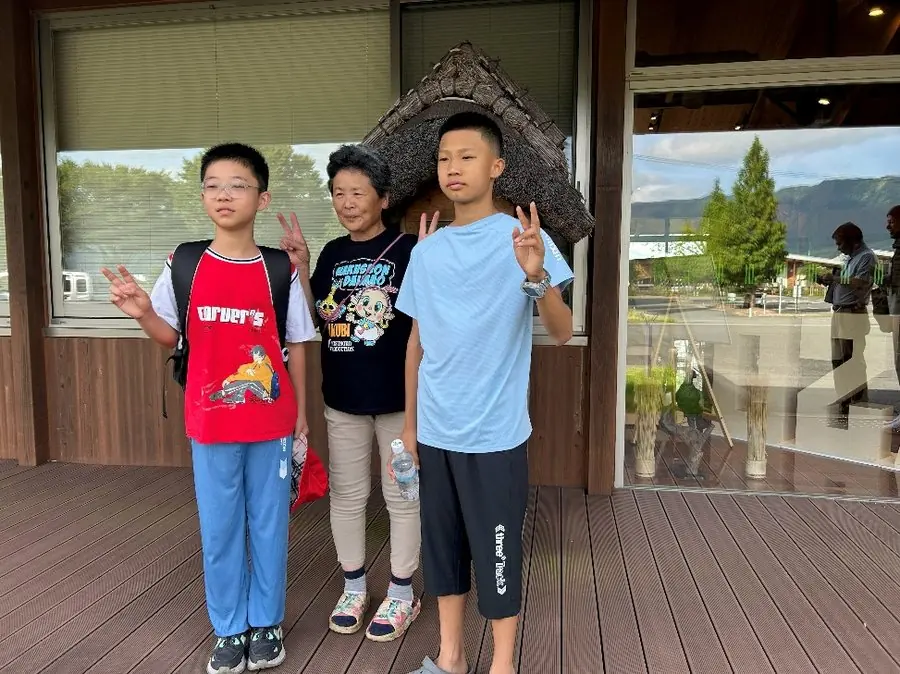
Two households, two mornings. The ridge behind them in both pictures is the wall of the caldera — you are inside it the entire time.
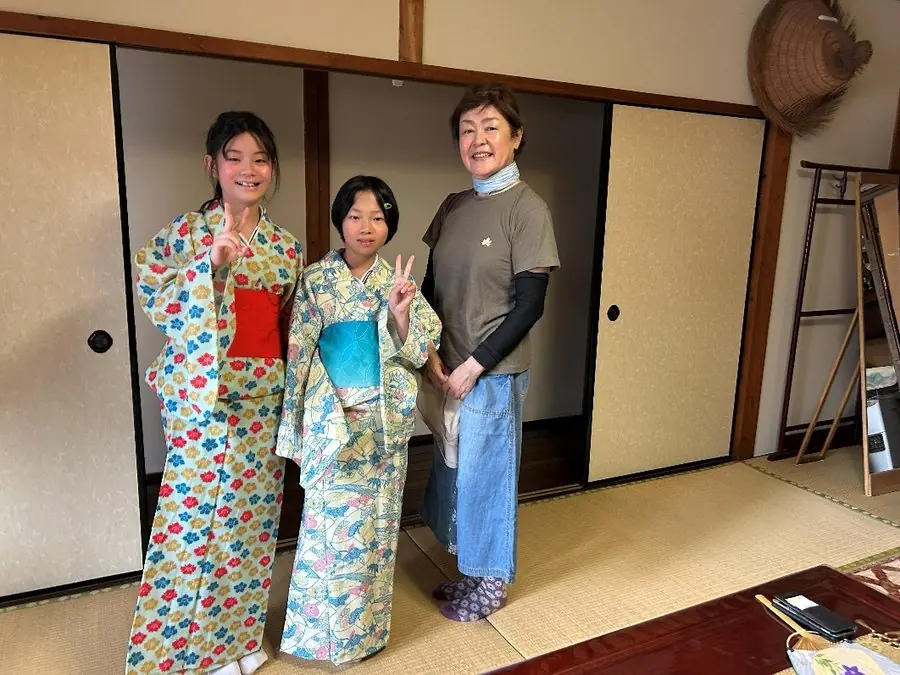
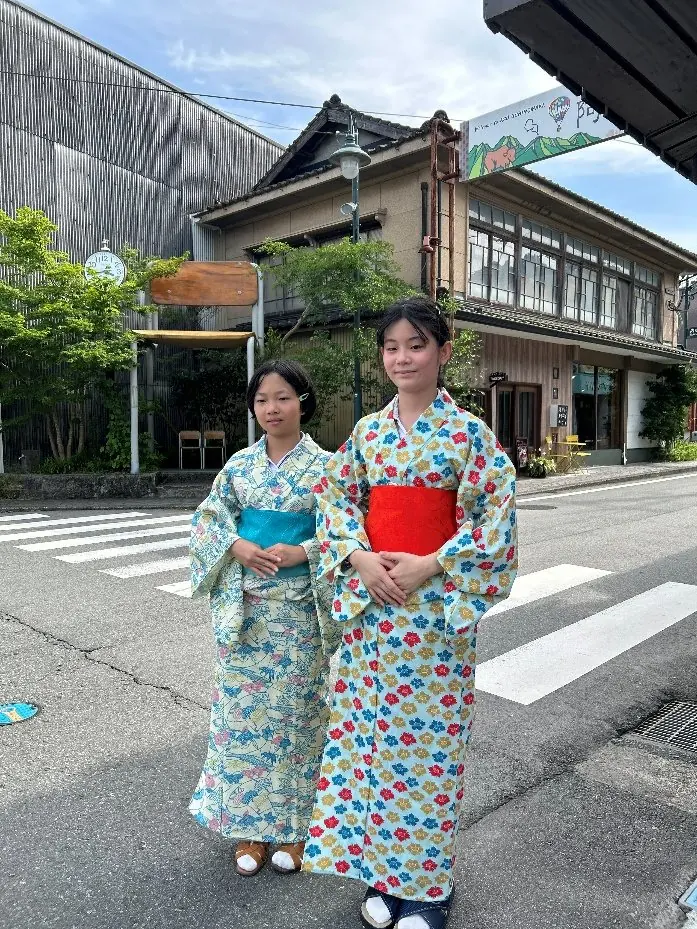
Yukata, if there are yukata in the house and somebody feels like teaching you how to tie one. This is not on any list of included activities, because there is no list.
In the order they always come.
This works best immediately after the estate — same valley, opposite ends of the same culture. Two nights where everything is precise and every art has a resident master, then one night where nothing is precise at all.
The estate is the hall with the armour in it — that segment is here. This is the house down the road. Doing them back to back is the reason both of them land.
This is not the cheap option. It costs roughly what you would have spent on the hotel night it replaces, with dinner and breakfast included. The households are not competing with hotels on price, and the money is not why they do it.
Placement is by the foundation, not by choice — you cannot pick a household, and neither can I. What I can do is tell them who is coming, how old, what they eat, and what they are like.
The first question is not your dates — it is whether you have another family to travel with. If you do, this is arrangeable. If you don't, tell me anyway; there is a version of the same idea that works for four people, and it is worth twenty minutes to find out which one you want.
Email meLicensed travel arrangement operator, Japan · I take four families a month