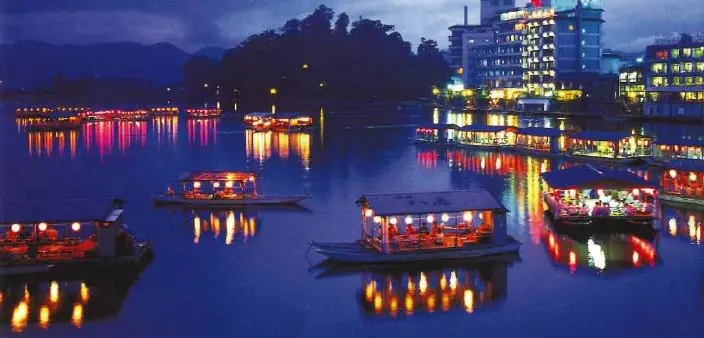
Cormorant fishermen working a river at Hita by firelight. A plum cellar that takes six people at a time and closes its book at five o'clock the day before. An active volcano that is open or shut depending on the volcano. And two hundred dolphins that live off Amakusa all year and do not care what month you come. Four nights west across Kyushu, from the ferry at Beppu to a flight out of Fukuoka.
Which is the entire argument for having a person on the ground instead of four confirmation emails.
Cormorant fishing is the oldest thing on this page by about a thousand years, and the part people do not expect is how close you get.
You eat on the boat first — a kaiseki laid out on low tables while it is still light, the river sliding past on both sides. Then the lanterns come down, the fishing boats come out with fire baskets hung over the bow, and the birds go into the water.
The master works up to a dozen of them on separate lines, by hand, in the dark, without looking at his hands. The boats come alongside close enough that you are looking down into the water where the birds are. Children who have spent four days being marched through temples wake straight up for this.
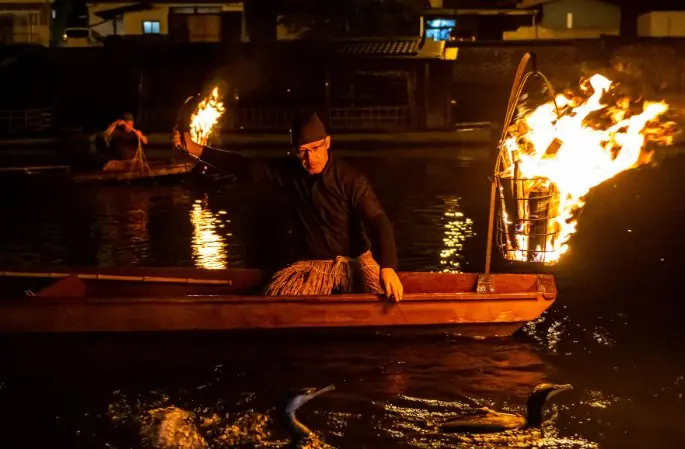
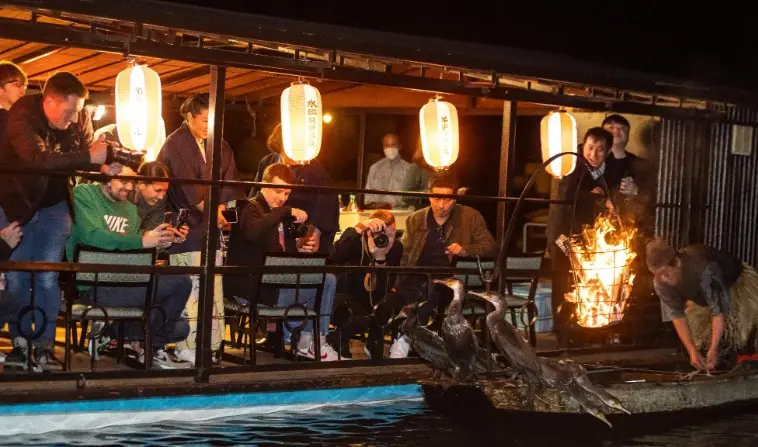
This is the actual distance. Nobody is watching from a bank through a lens.
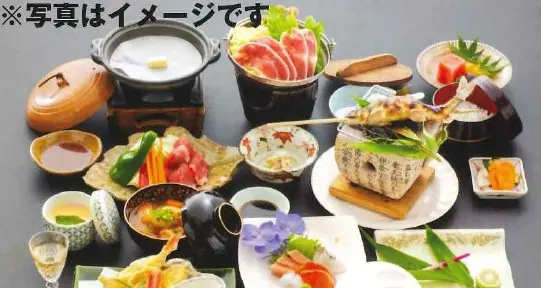
Minimum four adults on the shared dinner boats; the private charter takes two people upward. Booked three days ahead. Coloured yukata are lent free — which sounds like a small thing and is, in the photographs, not.
On a shared boat you sit with strangers, on their schedule, eating the set course. The entire twenty-seat boat is ¥42,900 — for two families that is roughly what the shared seats cost anyway, and you get the boat, the timing and the table to yourselves. This is the single easiest upgrade on the whole route and almost nobody asks for it, because almost nobody knows it exists.
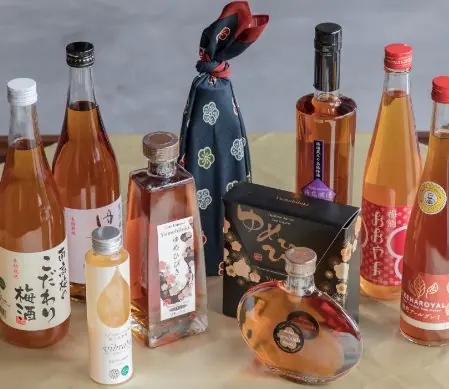
So they make plum syrup instead, at the same table, out of the same plums, and it is arguably the better souvenir.
Oyama is plum country — the hills above Hita were planted with ume decades ago as a way of keeping a mountain village in work, and the cellar at the bottom of the valley is the result. Racks of barrels, a production line you walk past behind glass, and a shop with more varieties of plum wine than you knew existed.
The making session takes thirty minutes. You pick your sugar and your spirit, you pack the jar yourself, you take it home and you leave it alone for a few months. Under-twenties cannot buy alcohol in Japan, so the children do the syrup version — ready far sooner, and drinkable by the person who made it.
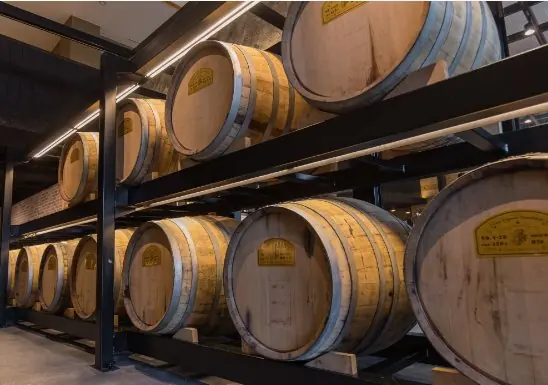
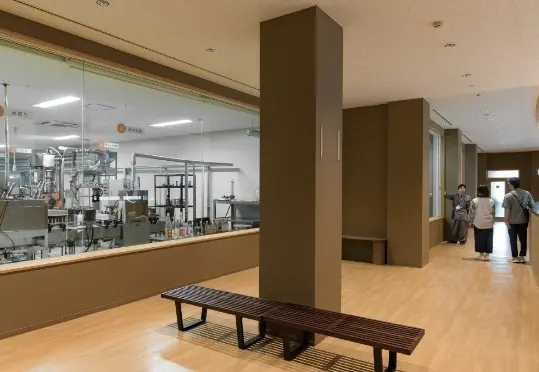
The barrels and the line. The tour is short and the point of it is that you smell the place before you taste anything.
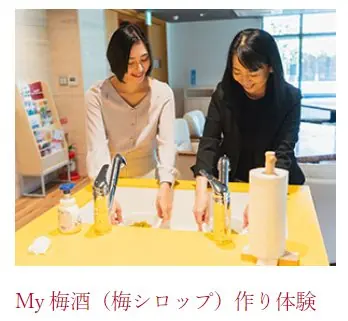
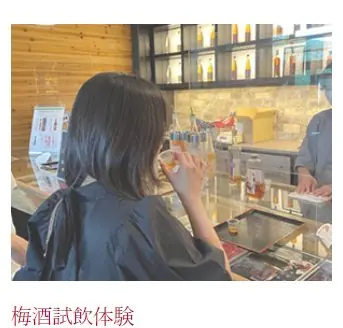
Left: the jar you take home. Right: the tasting, which is for the adults, and which is the reason the adults stop asking how long this is going to take.
Six seats. Two sessions. Telephone only, in Japanese, by five o'clock the previous afternoon. If your party is five and you turn up on the day, you are not getting in — and this is precisely the kind of thing that is invisible until you are standing outside it.
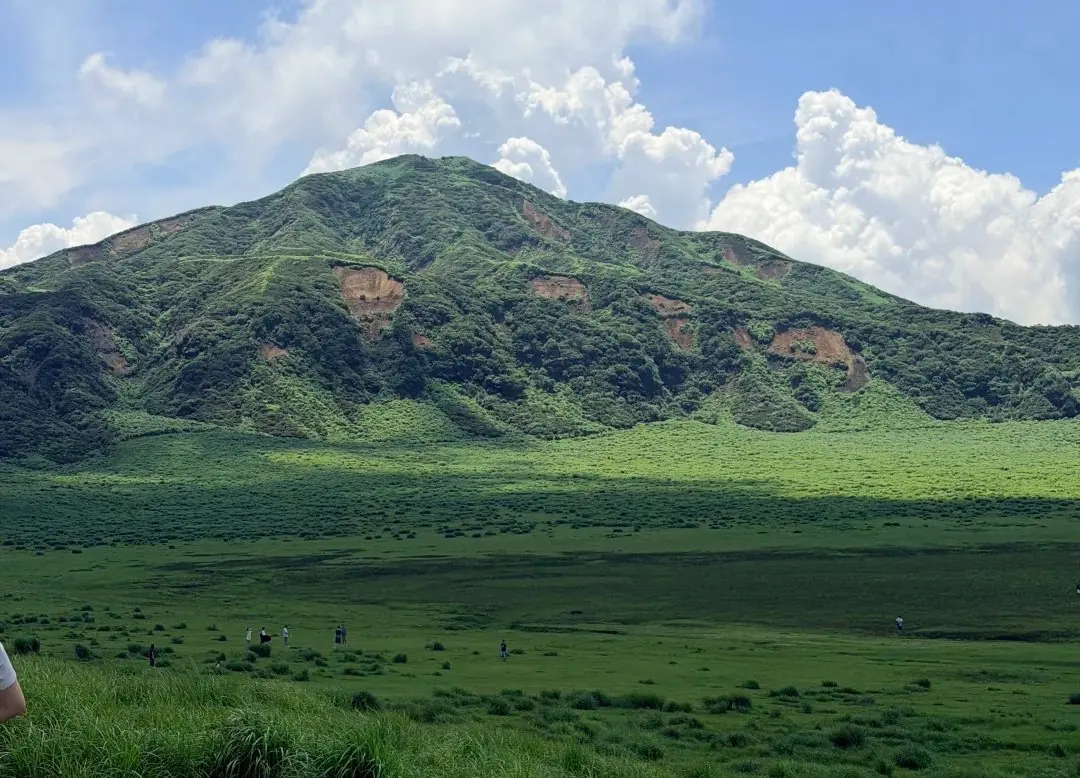
Aso is an active volcano with a monitored alert level, and the crater viewing opens and closes with it.
At the time of writing it is closed. Eruption warning level 2, a one-kilometre exclusion zone around the crater, the Aso Volcano Park toll road shut, and no announced date for reopening. Every brochure photograph of the smoking crater rim was taken when it was open, and none of them mention this.
What is open, and open regardless: Kusasenri — a flooded crater floor a kilometre across, grazed by horses and cattle, with the whole rim of the caldera standing around it — and the volcano museum above it, which is the best explanation in English of what you are standing inside.
So the honest version is this. I check the alert level against your dates, I tell you what it is, and I build the day around the answer. If the crater opens, we go up. If it does not, you will not have paid for a day built around something that was never going to happen.
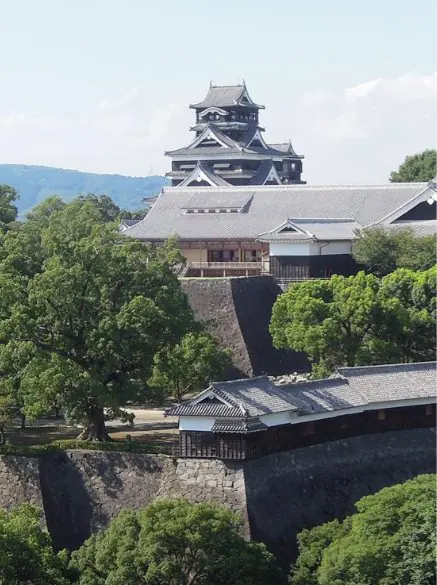
Your family has probably already seen Osaka Castle or Himeji. The reaction to a third one is normally polite.
This one is different for a reason you can see from the walkway: it is still broken. The 2016 earthquakes took out roughly twenty-three thousand six hundred square metres of stone wall — about a third of it. The keep itself was fully restored and reopened in April 2021, with an X-braced seismic frame inside it. The Uto turret is due in 2032. The castle as a whole is scheduled for completion in 2052.
There is a raised walkway six metres above the ground built specifically so that visitors can look down on the repair work in progress. Every fallen stone is numbered and goes back where it came from. A child who has just spent an afternoon at Kusasenri can be shown, from the top of the keep, the mountains that did this.
Every coastal town in the world sells a dolphin trip. Almost all of them are selling a chance.
Amakusa is selling a population. Roughly two hundred Indo-Pacific bottlenose dolphins live in the Hayasaki strait permanently — they are not passing through in a season, they are there in February and they are there in August. That is why the sighting rate is quoted at 98% and why nobody local treats that number as a boast.
The boat runs out through the Amakusa islands to reach them, which takes about forty minutes and is not dead time — it is the Five Bridges and the island channels, and it is the best view of Amakusa there is. There is a cabin with seats, air conditioning and a lavatory, which matters more than it sounds with a five-year-old and a following sea.
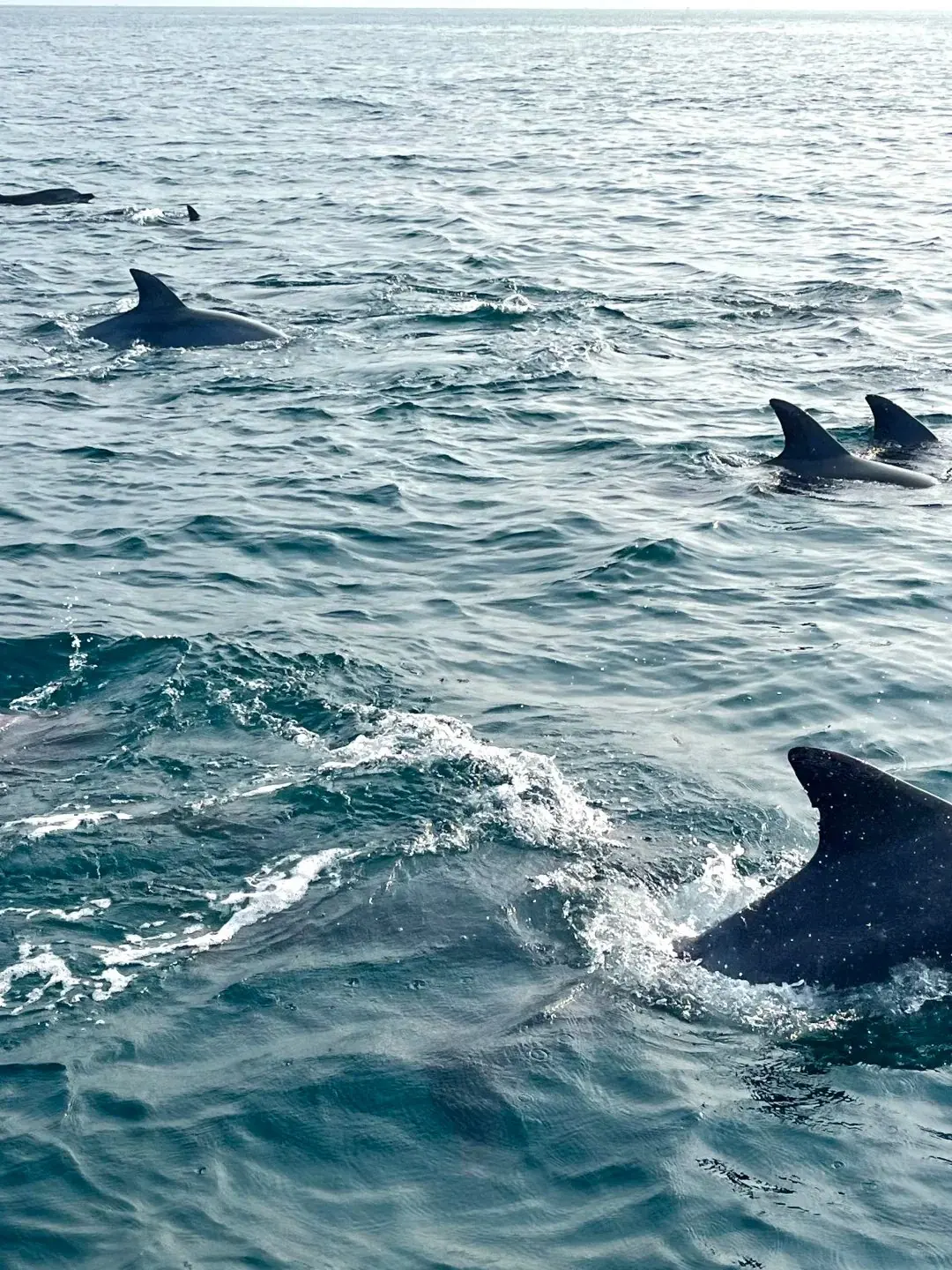
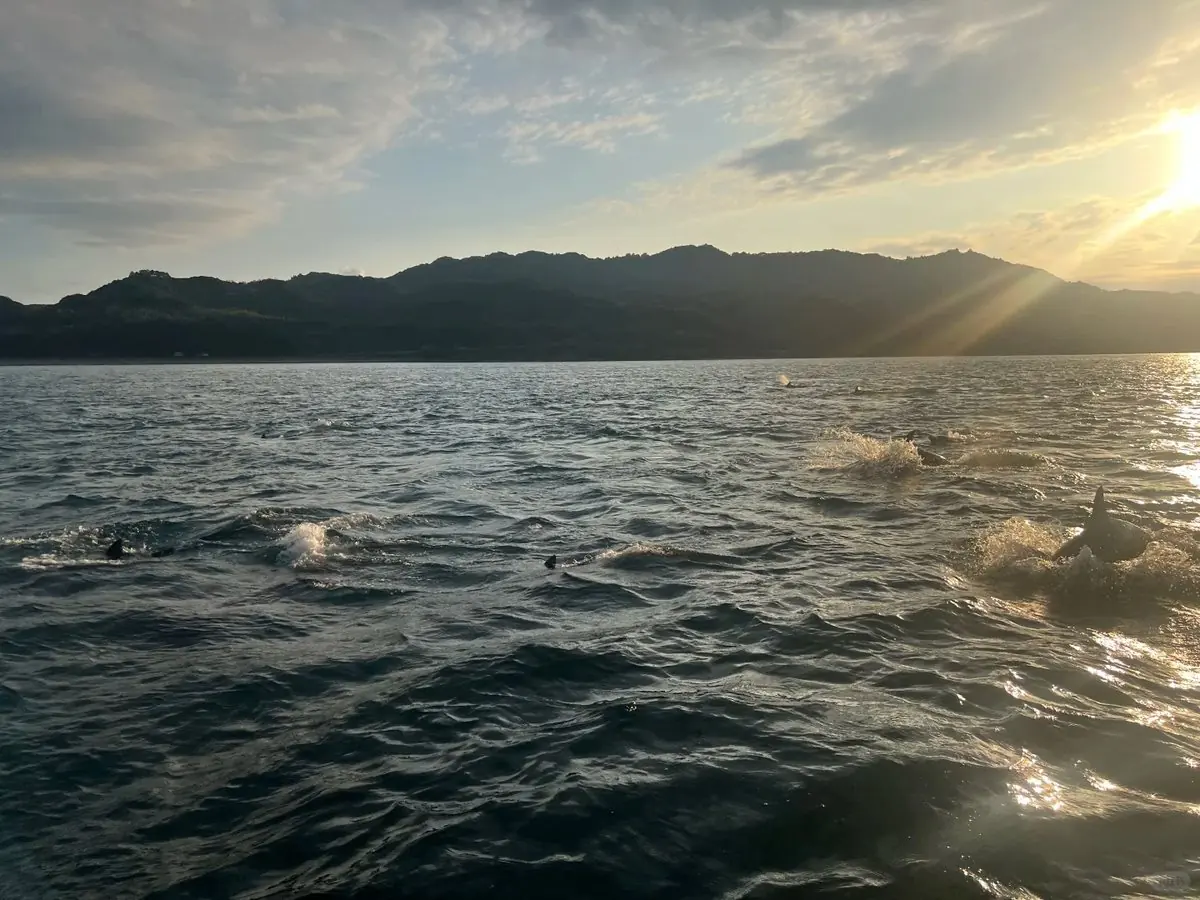
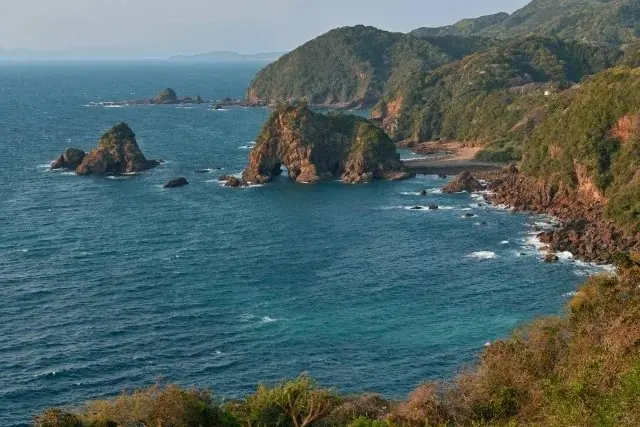
Left: the late sailing, which is the one to take if you have the evening rather than the morning. Right: the coast on the way out. The bridges you drive in over are locally called the Pearl Line, and they are worth crossing in daylight rather than at the end of the day.
Not because the light is better — because there is a fallback. If the ten o'clock is pulled for sea state, there is a one o'clock and a three o'clock and you still fly out of Fukuoka that evening. Put the dolphins on the afternoon of the day before and you get one attempt at the only thing your children have been asking about since Tokyo.
This is the westbound half. You sleep your way to Kyushu on the overnight boat from Osaka, land at Beppu at 06:55, and drive west for four days until you fly home out of Fukuoka.
The overnight crossing runs both ways — the eastbound version of it is here, where the ship is how you leave Kyushu rather than how you arrive. And the two nights at Aso are the estate segment, or a night in a farmhouse, or one of each.
On this route the dates decide everything before the budget does — the cormorants, the crater and the sea state all answer to the calendar rather than to me. Send me a month and I will tell you in one email which of these four you can actually have.
Email meLicensed travel arrangement operator, Japan · I take four families a month